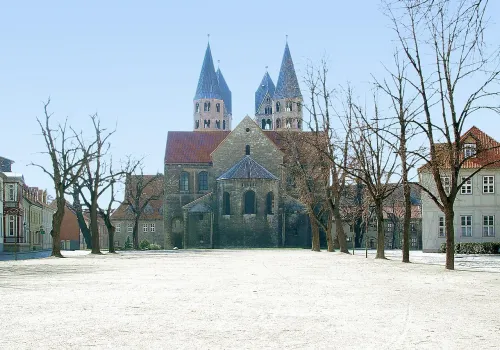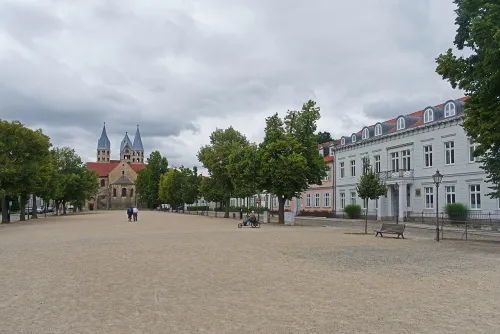


Halberstadt Cathedral
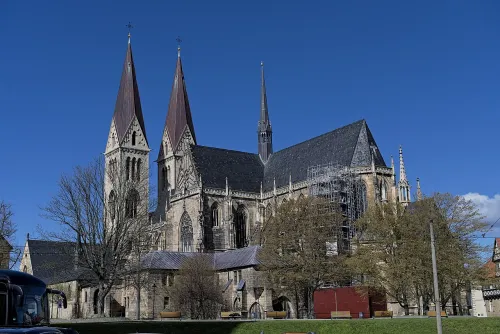
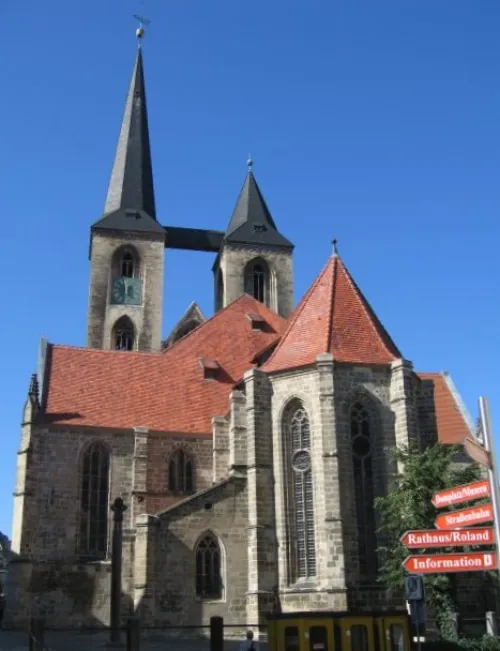
Begin in front of the cathedral of St Stephen and St Sixtus and take in its shape: a cross-shaped basilica built from the 13th into the 15th century in the style of northern French Gothic. That is rarer in Germany than you might expect. It is one of only a few large churches in the country that follow the French cathedral plan, and the long building period is there to read if you let your eyes travel along it.
There were cathedrals here long before this one. The diocese was founded in the 9th century as a mission and administrative centre in newly conquered Saxon territory. A Carolingian basilica consecrated in 859 collapsed in 965; its Ottonian successor, consecrated in 992, was already almost as large as the Gothic church you see. When Henry the Lion destroyed the town in 1179, the cathedral was badly damaged, then quickly repaired, newly vaulted and rededicated in 1220.
The Gothic rebuild has a rival behind it. Otto I made Magdeburg an archbishopric in 968, partly at the expense of the Halberstadt diocese, and in 1209 Magdeburg began its own cathedral, strongly shaped by French cathedral Gothic. Halberstadt answered in the same architectural language. Centuries later the cathedral turned Protestant in 1591, though its chapter stayed of mixed confession, and after secularisation it became a Protestant parish church in 1810.
Going in costs nothing, so do it. The real decision is the treasury: altarpieces, goldsmiths' work and reliquaries, vestments and textiles, furniture and liturgical manuscripts. Together with the cathedral's own furnishings they form the largest medieval ensemble still kept where it was used, outside the Vatican. The treasury charges admission, but if medieval craft interests you at all, buy the ticket and give it a proper hour; if you are short of time, the nave alone justifies the start.
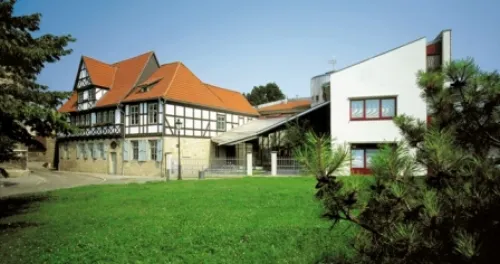
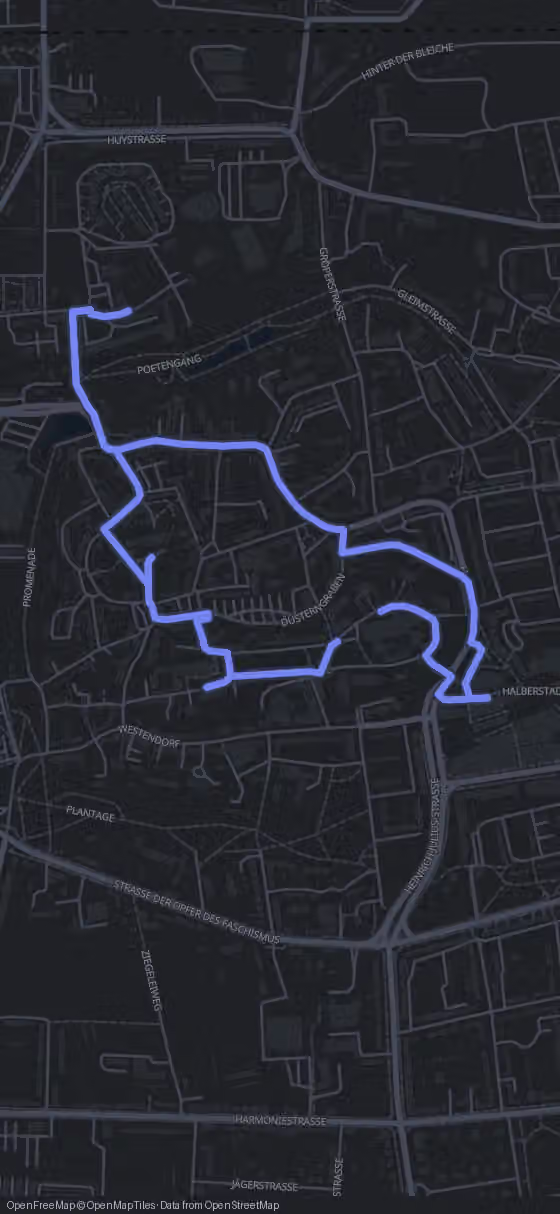
Gleim's house is a minute away, just 80 m behind the cathedral's choir, and the Museum Heineanum also sits right by your starting point.