

Monastery of Santa Cruz
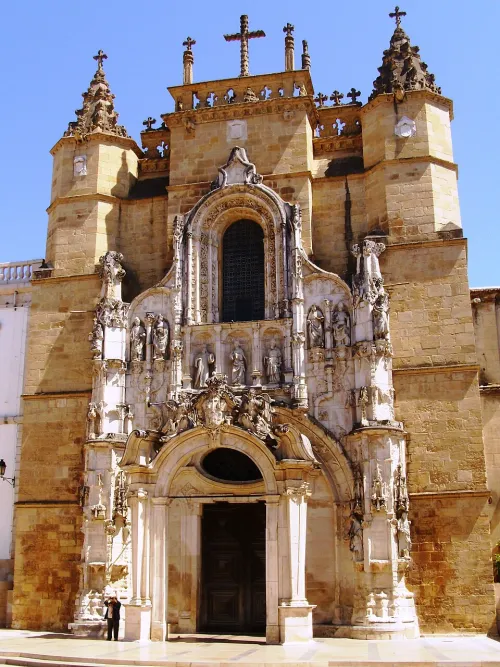
You start where the Portuguese monarchy chose to be buried. Saint Theotonius founded the Monastery of Santa Cruz in 1131 for the Canons Regular of the Holy Cross and became its first prior, and he built it deliberately outside Coimbra's protecting walls. The church and monastery rose between 1132 and 1223, and because the first two kings of Portugal lie here, the church holds the status of National Pantheon.
What you see today is not that first building. The Romanesque monastery, with a single nave and a tall tower on the facade, has vanished entirely. In the first half of the 16th century King Manuel took the monastery under his protection and had it rebuilt from scratch. Diogo de Boitaca laid out the Manueline church and the chapter house, so look up at the basket-handled and ribbed vaults; Marco Pires then finished the church, the Chapel of St Michael and the Cloister of Silence.
Head for the main chapel. In 1530 the tombs of Afonso Henriques and his successor Sancho I were moved there, set in sculptural work by Nicolau Chanterene. The choice of burial place was no accident: papal privileges and royal grants made the monastery rich, its school and vast library drew the intellectual and political elite, and Afonso Henriques used its scriptorium to consolidate royal power.
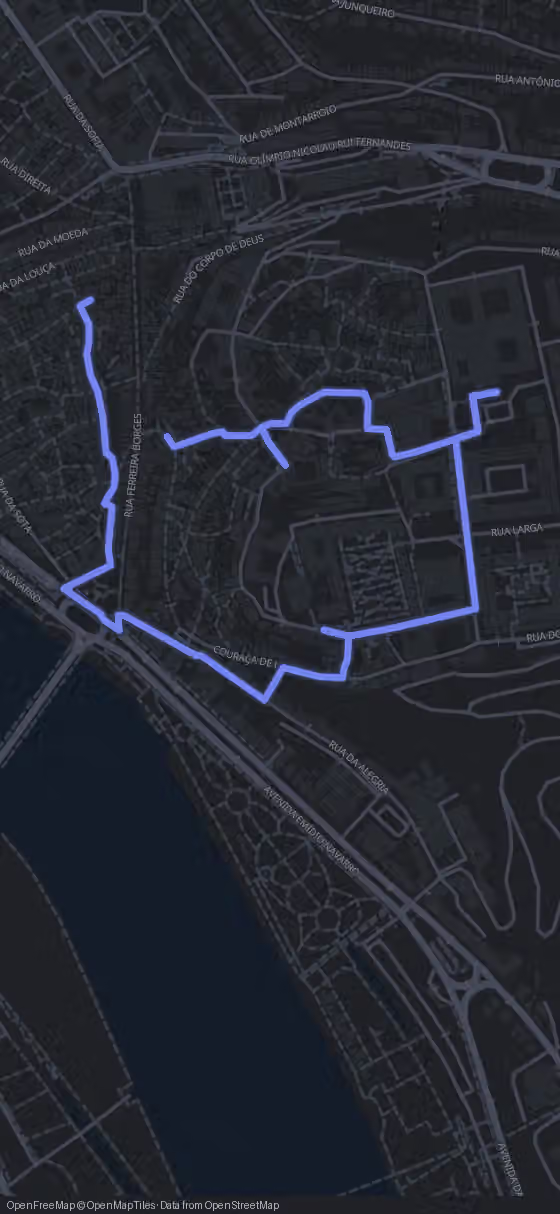
The church is free, the sacristy costs extra and is worth it if you want more time with the Manueline interior. From here the longest leg of the walk takes you 840 m, about 14 minutes, to the university.