Free Walking Tour Porto: Bolhão to the Bridge and Back

Start among the stalls of Bolhão, cross the Douro for the free view back over the old town, and finish under twenty thousand painted tiles at São Bento.

12 Stops 5.3 km ~1 h 21 min walking
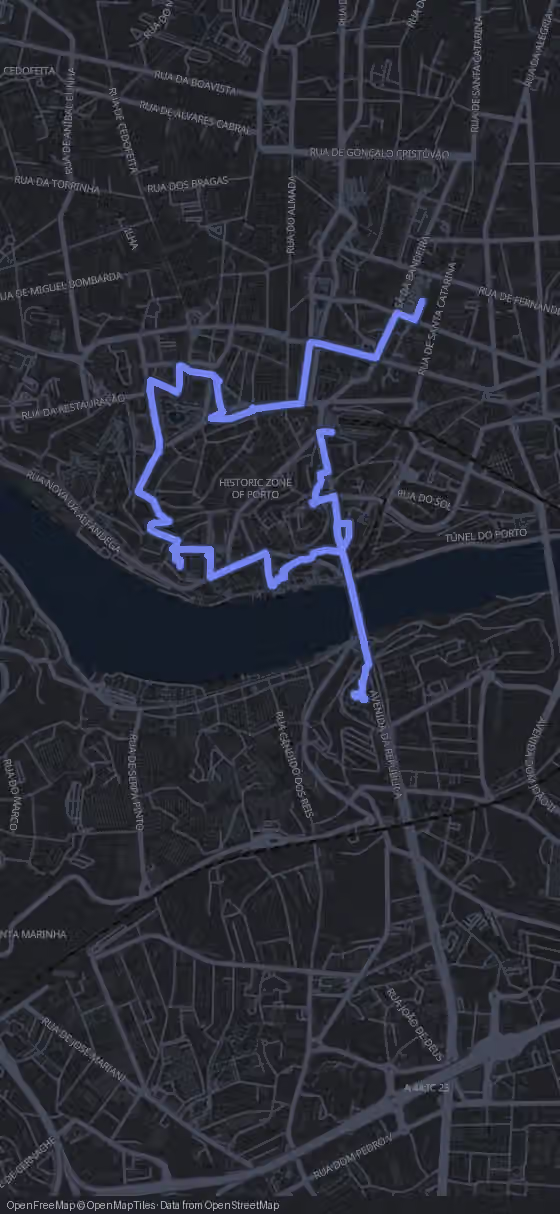
Route map for the Porto walking tour
Stop 1 of 12
590 m·7 min
Mercado do Bolhão
Head south-west toward Avenida dos Aliados
Olá, welcome to Porto. I'm Alex, and between two churches here, one tiny house kept more than bricks apart.
Try this tour with Alex

The Route at a Glance

Twelve stops over 5.3 km, from Mercado do Bolhão down to the river, across to Gaia and back up to São Bento Train Station. Pure walking time is 1 h 21 min; with a few interiors, plan on about four and a half hours.

Squares, the bridge and the views are free, and so are Porto Cathedral and the station. Clérigos Tower, Livraria Lello, Igreja do Carmo, Igreja de São Francisco and Palácio da Bolsa charge entry. The GPS route in your browser is free; the AI Tour Guide is optional.

Open free GPS & optional AI Tour Guide
This short shows highlights of the route. All 12 stops follow below.

The Route

Walking Map of Porto: Market Hall, River and Back

12 stops 5.3 km 1 h 21 min walking
Tap to load interactive map

The 12 stops along this route

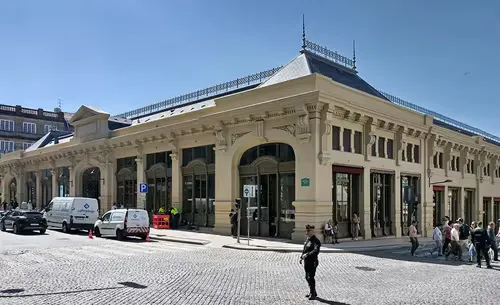
  1. Mercado do Bolhão in Porto, stop 1 on the self-guided walking tour
    1Mercado do Bolhão
  2. Avenida dos Aliados in Porto, stop 2 on the self-guided walking tour
    2Avenida dos Aliados
  3. Clérigos Tower in Porto, stop 3 on the self-guided walking tour
    3Clérigos Tower
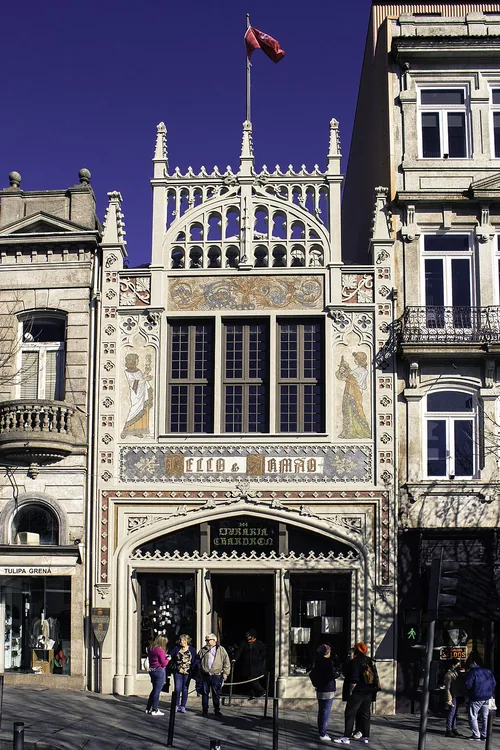
  4. Livraria Lello in Porto, stop 4 on the self-guided walking tour
    4Livraria Lello
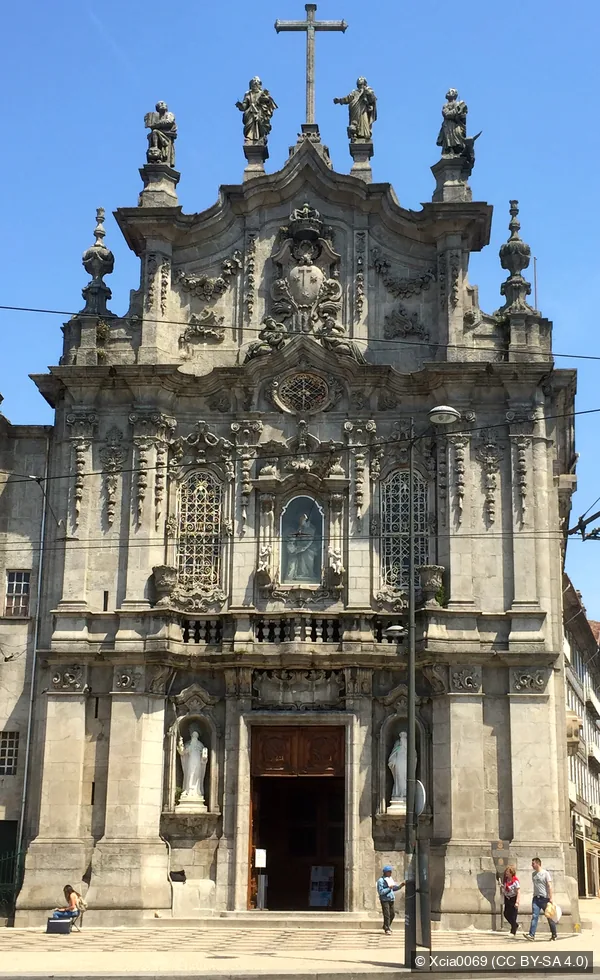
  5. Igreja do Carmo in Porto, stop 5 on the self-guided walking tour
    5Igreja do Carmo
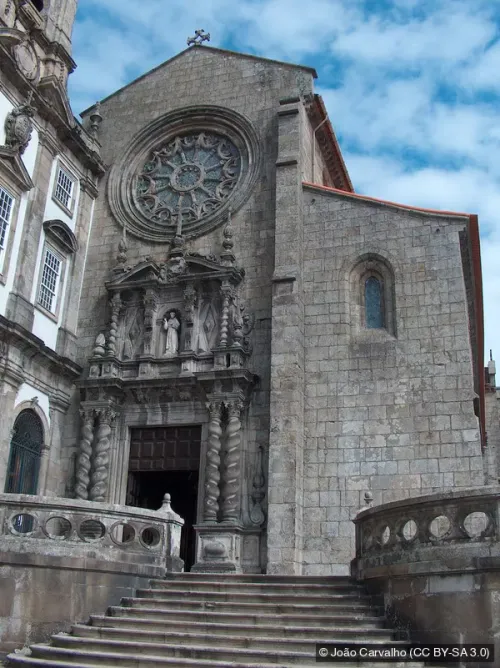
  6. Igreja de São Francisco in Porto, stop 6 on the self-guided walking tour
    6Igreja de São Francisco
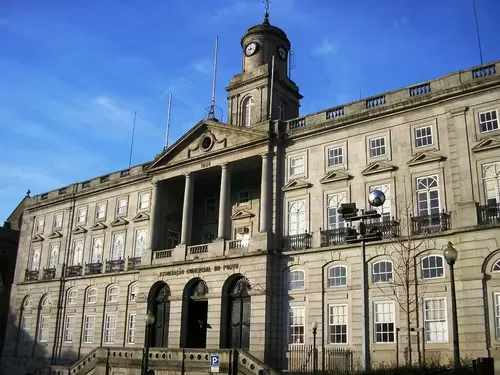
  7. Palácio da Bolsa in Porto, stop 7 on the self-guided walking tour
    7Palácio da Bolsa
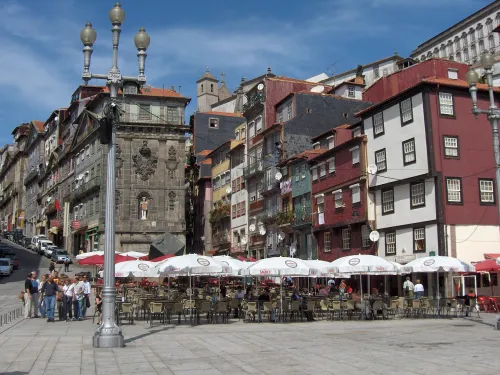
  8. Ribeira Square in Porto, stop 8 on the self-guided walking tour
    8Ribeira Square
  9. Dom Luís I Bridge in Porto, stop 9 on the self-guided walking tour
    9Dom Luís I Bridge
  10. Jardim do Morro in Porto, stop 10 on the self-guided walking tour
    10Jardim do Morro
  11. Porto Cathedral, stop 11 on the self-guided walking tour
    11Porto Cathedral
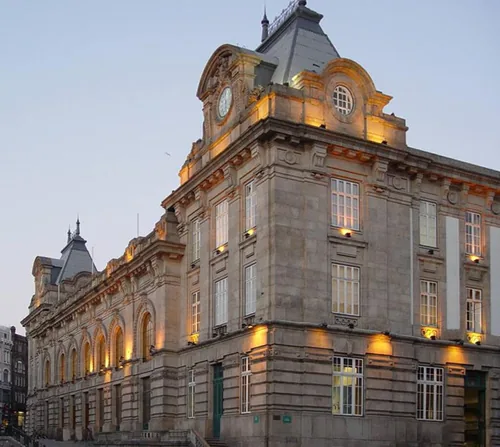
  12. São Bento Train Station in Porto, stop 12 on the self-guided walking tour
    12São Bento Train Station
  13. That's the full route.

    Walk it with an AI Tour Guide talking you through every one of these streets.

    Start free in your browser
    You made it

Your Porto Walking Tour Stop by Stop, from Bolhão to São Bento

  1. 1

    Mercado do Bolhão

    Mercado do Bolhão in Porto, stop 1 on the self-guided walking tour

    Start where Porto shops for dinner. Mercado do Bolhão is a monumental neoclassical market hall, and its traders work on two levels, grouped into sections: fishmongers, butchers, fruit and vegetables, flowers. Fresh food is the whole point here, so come hungry or at least curious. Around the outside of the building, shops sell everything else, from coffee to perfume, clothing and fabric.

    The name has a muddy origin. In 1839 the city council decided to build a market square on land bought from the cathedral chapter. The plot was a wide, wet meadow crossed by a stream that welled up into a bubbling pool, a bolha, and the bubble became the name. A few years later the square was improved with access ramps and wooden stalls along its central aisle.

    The building has four main entrances at different heights: from Rua Formosa you walk in at ground level, the side entrances on Rua de Sá da Bandeira and Rua Alexandre Braga bring you in halfway, and Rua de Fernandes Tomás leads straight onto the upper level. It was approved as a property of public interest in 2006 and classified as a monument of public interest in 2013. Entry is free, so even a quick lap is worth it.

    The streets around the market are known for traditional food shops. Look out for old fine grocers such as Casa Chineza, Casa Transmontana and Pérola do Bolhão. Then walk 590 m, about 7 minutes, to Avenida dos Aliados.
    Hours
    Mon–Fri 08:00–20:00, Sat 08:00–18:00, Sun closed
    Price
    Free
  2. 2

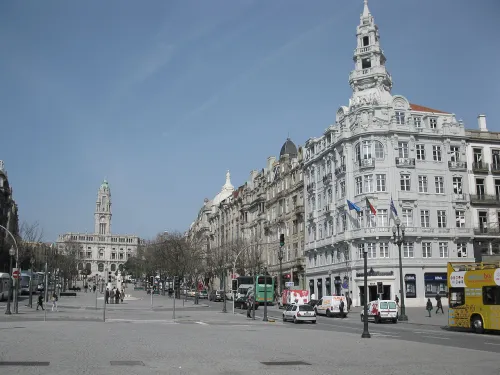
    Avenida dos Aliados

    Avenida dos Aliados in Porto, stop 2 on the self-guided walking tour

    Avenida dos Aliados is the main avenue and the centre of Porto, and together with Praça da Liberdade and Praça do General Humberto Delgado it forms one continuous stretch of city. People here call it the city's living room: this is where Porto gathers when there is something to celebrate. Look up at the buildings, all solid granite, many crowned with lanterns, domes and spires.

    The name honours the Allied nations of the First World War. Work began on 1 February 1916 in the presence of President Bernardino Machado, and the ceremony was a foundation stone in reverse: they removed the ‘first stone’ from the baroque palace on Praça da Liberdade that had housed the city council since 1816. On that same day the council approved the present city hall just above the avenue, part of a civic-centre plan by the English architect Barry Parker. Before all this, the site was a tangle of short streets and alleys known as ‘the wash-houses’.

    Henrique Moreira's statue A Juventude, Youth, was put up in 1929. The wide central strip was a garden until mid 2006; today it is paved with granite setts. The redesign by Álvaro Siza Vieira and Eduardo Souto Moura came with the building of the Aliados station on metro line D, whose two entrances face each other roughly halfway along. When the gardens went, the entrances to the old Congregados pedestrian tunnel were sealed too.

    Everything here is free and always open. From the avenue it is 410 m, about 7 minutes, to Clérigos Tower.

    Hours
    Always open
    Price
    Free
  3. 3

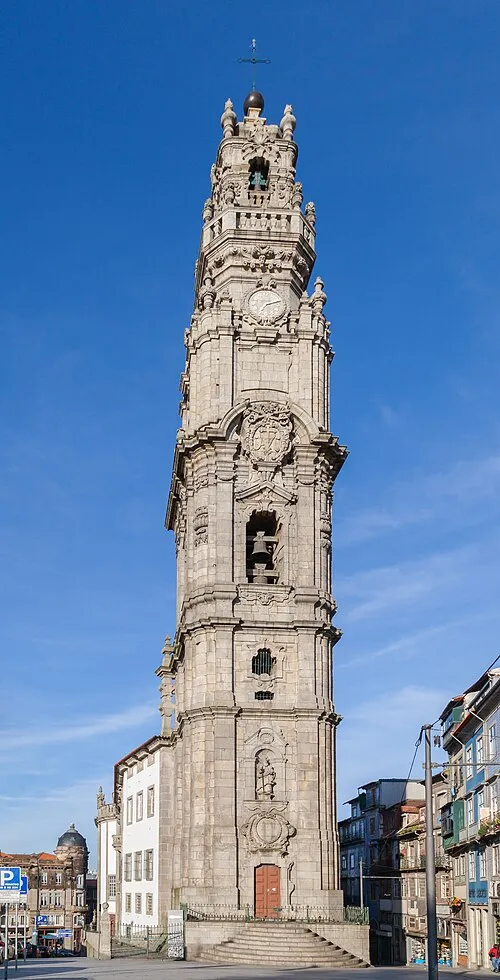
    Clérigos Tower

    Clérigos Tower in Porto, stop 3 on the self-guided walking tour

    Here is the first paid door of the day, and the simplest one: a tower, a museum and the city from up high. The day ticket covers both, students pay less, young children go free, and on special dates there is a tower-only night ticket as well.

    Is it worth it? On a first visit it is the most skippable of the paid stops on this route, and that is a judgement about value, not quality. Later today you will stand in Jardim do Morro across the river with the old town, the Douro and the bridge in one frame, and that view costs nothing. The tower pays off if what you want is the view over the rooftops themselves, or if interiors leave you cold and height is your thing.

    If you would rather save your budget, put it toward the gilded interior of Igreja de São Francisco near the river. From the tower, Livraria Lello is only 220 m away, about 3 minutes on foot.

    Hours
    Daily 09:00–19:00
    Price
    Day ticket tower + museum 10 EUR, students 7 EUR, children up to 10 free (tower-only night ticket 5 EUR on special dates)
  4. 4

    Livraria Lello

    Livraria Lello in Porto, stop 4 on the self-guided walking tour

    Livraria Lello is, along with Bertrand in Lisbon, one of the oldest bookshops in Portugal, and it regularly appears near the top of international rankings of the world's finest bookshops. The building on Rua das Carmelitas opened in 1906, built for the Lello brothers by the engineer Francisco Xavier Esteves.

    The roots go back to 1869, when the Frenchman Ernesto Chardron founded an international bookshop on Rua dos Clérigos. He died at 45, and the business was sold on. Meanwhile, in 1881, José Lello set up a firm with his brother-in-law; when the brother-in-law died the following year, José went into business with his younger brother António. The two, sons of a landowner from Santa Marta de Penaguião, became prominent figures of Porto's intellectual bourgeoisie, bought up other bookshops in the city and in 1894 took over Chardron itself.

    The name kept shifting: Lello & Irmão from 1919, simply Livraria Lello after 1930, then Lello & Irmão again until 1940. In 1981 the regional culture authority proposed classifying the shop as heritage.

    Entry is by ticket, and the ticket is a voucher: its full value counts toward a book from the shop's own Livraria Lello editions, though not toward notebooks or merchandise. Most of those editions cost less than the ticket, so if you were going to buy a souvenir anyway, this is it. Buy on the official ticket site rather than through reseller combos, which cost far more. Then walk 190 m, about 3 minutes, to Igreja do Carmo.

    Hours
    Daily 09:00–19:30
    Price
    15.95 EUR ticket-voucher (free visit; amount deductible from a book from Edições Livraria Lello); other experiences from 29.95 EUR
  5. 5

    Igreja do Carmo

    Igreja do Carmo in Porto, stop 5 on the self-guided walking tour

    Igreja do Carmo stands where Praça de Carlos Alberto meets Rua do Carmo, close to the Clérigos church and tower. It is baroque and rococo, built between 1756 and 1768 for the Third Order of Our Lady of Carmel to plans by the architect José Figueiredo Seixas. The order's hospital came later and was finished in 1801.

    Now look at the gap between this church and its neighbour. Igreja do Carmo was built on land right next to the older Igreja dos Carmelitas, given to the order in 1752, and back then two churches were not allowed to stand wall to wall. The solution was a house squeezed in between, the Casa Escondida, the hidden house, little more than one and a half metres wide. Local guides call it the narrowest house in Porto. Both churches were classified together as a National Monument in 2013.

    In recent years the order has opened its heritage to visitors, space by space. The tourist circuit begins through the hidden house and continues into the church, the small catacombs, the grand hall, the vestments room and the sacristy, with paintings, sculpture, liturgical robes and relics along the way. Part of the ticket goes toward restoring the order's treasures. During mass, the rosary or a wedding the full circuit pauses, but the hidden house can usually still be visited.

    Worth it? Yes, if you like curiosities and church treasures; the hidden house alone is a story you will retell at home. Next comes a longer leg, 990 m, about 14 minutes, to Igreja de São Francisco, passing Passeio das Virtudes on the way.

    Hours
    Daily 09:30–18:00 (1 Apr–30 Oct); daily 09:30–17:00 (1 Nov–31 Mar)
    Price
    Church and tourist circuit 8 EUR
  6. 6

    Igreja de São Francisco

    Igreja de São Francisco in Porto, stop 6 on the self-guided walking tour

    From the outside Igreja de São Francisco looks almost austere, and that is part of its story. It is the most prominent Gothic monument in Porto and the best example of Gothic architecture in the city, because its overall structure has hardly been altered. On the main façade, the large, elaborate Gothic rose window is the only original decoration.

    The Franciscans arrived in Porto around 1223 and were not welcome: other religious institutions, above all the bishop of Porto, fought them, and it took a papal bull from Pope Innocent V to give back the land they had been donated. Around 1244 they began the convent and a first, small church. In 1383, under the patronage of King Ferdinand I, work started on a larger church, finished around 1425 in the plain Gothic typical of the mendicant orders in Portugal.

    Then step inside, and the plainness is gone. In the first half of the 18th century almost every surface, walls, pillars, side chapels and roof, was covered in talha dourada, Portuguese gilt woodwork in Baroque style, and the altarpieces in the apse chapels and the nave are among the best in Portugal. In the 15th and 16th centuries leading Porto families chose this church as their pantheon; look for the Chapel of St John the Baptist, built in Manueline style in the 1530s for the Carneiro family.

    Entry is paid, and you get the current price at the ticket desk. If you only pay for one interior today, this is a strong candidate. The convent's old cloisters burned in 1832 during the siege of Porto, and what replaced them stands right next door: Palácio da Bolsa, 210 m away, about 3 minutes.

    Hours
    Summer (1 Apr-30 Sep) 09:00–20:00, Winter (1 Oct-31 Mar) 09:00–19:00, closed 25 Dec
  7. 7

    Palácio da Bolsa

    Palácio da Bolsa in Porto, stop 7 on the self-guided walking tour

    Palácio da Bolsa, the Stock Exchange Palace, stands on Infante D. Henrique Square, on the ground where the Franciscan cloisters burned during the Liberal Wars. In 1841 Queen Mary II gave the convent ruins to the city's merchants, and their Commercial Association decided to build its headquarters here. Work began in 1842.

    The architect Joaquim da Costa Lima Júnior, in charge from 1840 until 1860, designed a neoclassical palace in the Palladian manner that had been in fashion in Porto since the late 18th century, in buildings such as the Hospital of St Anthony by the English architect John Carr and the English Factory by John Whitehead. Most of the building stood by 1850, but the interior was only completed in 1910 and drew in several artists: Tomás Augusto Soler designed the metal dome over the courtyard, Gustavo Adolfo Gonçalves e Sousa the Arab Room, and Joel da Silva Pereira the Tribunal Room.

    The palace has been a National Monument since 1982. Visits are guided tours of about 30 minutes, so you cannot simply wander in at your own pace. It is worth it if grand 19th century interiors are your thing; if the budget only stretches to one ticket here, the gilded church next door gives you more.

    From the palace it is 420 m, about 6 minutes, to Ribeira Square, through the lanes of the Ribeira District.

    Hours
    Daily 09:00–18:30 (last entry 18:30); reduced hours 24 Dec (last entry 13:00) and 31 Dec (last entry 16:00); closed to visitors 30 Sep
    Price
    EUR 14 adult; EUR 9.50 reduced
  8. 8

    Ribeira Square

    Ribeira Square in Porto, stop 8 on the self-guided walking tour

    Ribeira Square takes its name from the quay, Porto's riverbank, and it is one of the oldest squares in the city: royal letters already mention the square and the quay in 1389. In the Middle Ages this was a place of intense trade, with stalls and a fish market, thanks to a port a few kilometres from the mouth of the Douro.

    Around 1370 the new city wall, the Cerca Nova, cut the square off from the river; from then on you reached the water through the Porta da Ribeira on the square's southeast corner. After a great fire in 1491 the area was rebuilt with arcaded houses on columns, and the square was paved.

    Because so much trade passed through here, the city always kept an eye on it. In the 18th century João de Almada e Melo set out to give it a monumental look and to open a corridor for goods and people, running from the square via Rua de São João, Largo de São Domingos and Rua das Flores to Rua do Almada. The British consul John Whitehead proposed an arcade to close the square on its west and east sides and turn it into one unit. The whole ensemble has been protected as a property of public interest since 1971.

    The square is free and always open. It is also where touts and photo menus try to steer you into lunch on the waterfront: enjoy the view and eat elsewhere. From here it is 770 m, about 14 minutes, to Dom Luís I Bridge.

    Hours
    Always open
    Price
    Free
  9. 9

    Dom Luís I Bridge

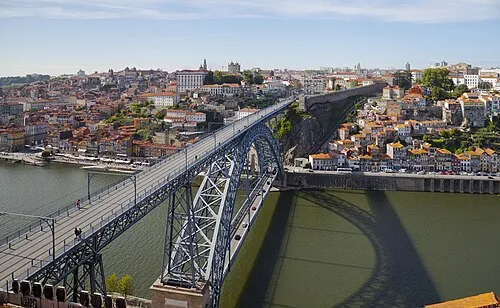
    Dom Luís I Bridge in Porto, stop 9 on the self-guided walking tour

    Dom Luís I Bridge, Ponte de D. Luís to locals, is a double-deck metal arch over the Douro between Porto and Vila Nova de Gaia. When it was built, its 172 metre span was the longest of its type in the world. Today the upper deck belongs to pedestrians and metro line D, while buses, taxis, cyclists and pedestrians use the lower deck, which links the Ribeira waterfront with the port wine lodges on the Gaia side.

    The bridge began with a rejection. In 1879 Gustave Eiffel proposed a single high deck so ships could pass beneath, but the city was growing so fast that one deck would not be enough. A competition in November 1880 drew entries from French, Belgian and British firms, Eiffel's among them, and in January 1881 the committee chose the Belgian Société de Willebroek. Its project was led by Théophile Seyrig, Eiffel's former partner and the author of the design.

    If you think you have seen this bridge before, you may be thinking of the Maria Pia Bridge, a similar-looking railway bridge built nine years earlier, about a kilometre to the east.

    Crossing is free at any hour. On the Gaia side, Jardim do Morro is 360 m away, about 6 minutes, right beside the upper deck.

    Local name
    Ponte de D. Luís
    Hours
    Open 24/7
    Price
    Free
  10. 10

    Jardim do Morro

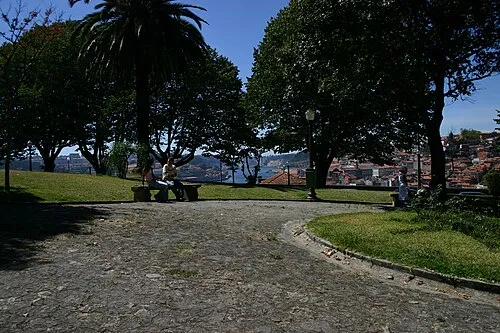
    Jardim do Morro in Porto, stop 10 on the self-guided walking tour

    Jardim do Morro sits at the foot of Serra do Pilar in Vila Nova de Gaia, beside the upper deck of the bridge, and it works as a viewpoint straight across to the historic centre of Porto. Turn around and you have the old town, the river and the bridge in a single frame, which is why this free garden can easily replace a paid viewpoint.

    The garden was laid out in 1927 and its design has changed little since. Look for the pond, the bandstand and the row of 22 lime trees along the final stretch of Avenida da República. Today it sits right next to the metro and sees thousands of visitors passing through.

    The Gaia cable car, opened on 1 April 2011, runs 560 metres between the quay at Cais de Gaia and this garden, useful if you want to see the wine lodges by the water before heading on. Otherwise, rest your legs on a bench; the next leg takes you 850 m, about 14 minutes, back across the river to Porto Cathedral.

    Hours
    Open 24/7
    Price
    Free
  11. 11

    Porto Cathedral

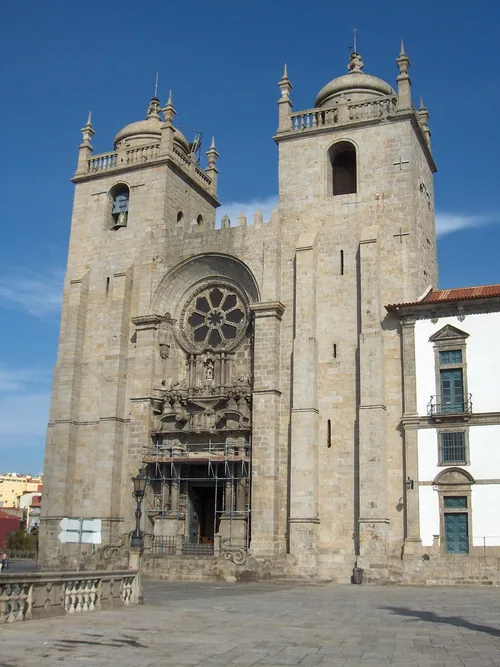
    Porto Cathedral, stop 11 on the self-guided walking tour

    Porto Cathedral, the Sé, looks more like a fortress than a church: two square towers, each braced by two buttresses and crowned with a cupola, a plain, patchwork façade, and a Romanesque rose window under a crenellated arch. It is one of the oldest monuments in the city and one of its most important Romanesque buildings.

    The story starts with a chapel founded in 1108 by Henry of Burgundy and his wife. The present building was begun in the second half of the 12th century, and work continued until the 16th. Inside, the narrow Romanesque nave is covered by a barrel vault, flanked by two lower aisles, and the stone roof of the central aisle rests on flying buttresses, making this one of the first buildings in Portugal to use them.

    Find the Gothic funerary chapel of João Gordo, added around 1333. He was a Knight Hospitaller in the service of King Dinis I, and his tomb shows him lying in stone among reliefs of the Apostles. The elegant Gothic cloister dates from the reign of King John I, who married the English princess Philippa of Lancaster in this cathedral in 1387. The Baroque left its mark too: in 1736 the Italian architect Nicolau Nasoni added the loggia on the side façade, and in 1772 a new main portal replaced the Romanesque original.

    The church itself is free to enter; the cloister may have its own ticket, sold on site. From here São Bento Train Station is just 320 m away, about 4 minutes.

    Local name
    Sé do Porto
    Hours
    Summer 09:00–18:30, Winter 09:00–17:30, closed during Christmas and Easter periods
    Price
    Free
  12. 12

    São Bento Train Station

    São Bento Train Station in Porto, stop 12 on the self-guided walking tour

    Finish inside a picture book. São Bento Train Station is famous for its large tile panels: around twenty thousand azulejos covering 551 square metres, designed and painted by Jorge Colaço. The murals show moments from Portugal's history, while the multicoloured panels show rural scenes with people from the country's different regions. Looking costs nothing, so take your time.

    The station stands on the site of the Benedictine convent of São Bento da Avé Maria, ordered by King Manuel I in 1518. Fire destroyed the monastery in 1783; it was rebuilt as a convent, had fallen into disrepair by 1892, when the last nun died, and was demolished that same year. São Bento simply means Saint Benedict.

    The railway arrived before the building. A central station had been floated as early as 1864, the tunnel was under way by 1890 and finished in 1893, and the first train pulled in here in 1896. Construction of the present station, designed by the architect José Marques da Silva, began in 1904 and took a number of years.

    An underground link connects the hall to São Bento metro station on line D, handy if you are heading on. The walk ends here; if you want to go back to the market, the GPS navigation in your browser can lead you to the start.

    Local name
    Estação ferroviária de São Bento
    Hours
    Daily 05:30–23:30 (viewing area accessible 24/7)
    Price
    Free (to view interior)
    Website
    cp.pt ↗
Walking tour route map of Porto Route loaded
Mercado do BolhãoAvenida dos AliadosClérigos TowerLivraria Lello+8
All 12 stops are already on the map.
You just press start.
AI Tour Guide

You've Read the Route. Now Walk Porto with a Guide in Your Ear

Press start wherever you are, even hundreds of kilometres from Porto, and the guide begins telling its stories right away. In the city, pick any of the 12 stops to start from: it leads you there, then talks with you the whole route, asking, listening, remembering, and shaping the tour around your answers.

12stops 5.3km 1 h 21 minwalking 13languages
▶Start the tour free

Free to start · Runs in your browser · No app, no download

Three Ways to Shape the Walk

The full loop of the old town and Gaia fits into one day, but it splits naturally into an upper half and a river half, and it works on a tight budget too.

Upper town only

Stops: 1, 2, 3, 4, 5

For a short morning or a first evening in Porto. From the market to Igreja do Carmo is just 20 minutes of walking. Clérigos Tower, Livraria Lello and Igreja do Carmo charge entry; Mercado do Bolhão and Avenida dos Aliados are free.

River, Gaia and the cathedral

Stops: 6, 7, 8, 9, 10, 11, 12

For a second day, or if you have already seen the upper town. 47 minutes of walking, including the crossing to Gaia and back. Igreja de São Francisco and Palácio da Bolsa charge entry; Ribeira Square, the bridge, Jardim do Morro, Porto Cathedral and São Bento are free.

The whole route without tickets

Stops: 1, 2, 3, 4, 5, 6, 7, 8, 9, 10, 11, 12

For a tight budget: walk all twelve stops, take in the five paid ones from outside and spend nothing on entry. Walking time stays at 1 h 21 min.

How Long This Porto Tour Takes, With and Without Interiors

The walking itself is light: 1 h 21 min over eleven legs, most of them under ten minutes. The three longer ones, from Igreja do Carmo to Igreja de São Francisco, from Ribeira Square to the bridge and from Jardim do Morro back to the cathedral, take about 14 minutes each.

Realistically, plan on about four and a half hours if you go inside Livraria Lello, Igreja do Carmo, Igreja de São Francisco and Palácio da Bolsa and stop once for coffee; add time if you also go up Clérigos Tower. Walking the route with outside views only takes about two and a half hours.

The upper-town version fits into about an hour and a half with its three interiors. The river half takes about two and a half hours with São Francisco and the Bolsa, or a little over an hour if you only look from outside.

Before You Set Off from Bolhão

  • Start and finish: The recommended order begins at Mercado do Bolhão and ends at São Bento Train Station, but you can join at any stop. From the station, the GPS navigation in your browser can lead you back to the market if you want.
  • Time of day: Start in the morning: you see Bolhão as a working food market, and you keep enough of the day for the interiors near the river.
  • Entry fees: Clérigos Tower, Livraria Lello, Igreja do Carmo, Igreja de São Francisco and Palácio da Bolsa charge entry. The market, the squares, the bridge, the garden in Gaia, the cathedral church and the station are free.
  • From the airport: Metro line E runs direct from the airport to Trindade in the centre in about half an hour or a little more, for far less than a taxi. You need a rechargeable Andante card, bought once; a taxi only makes sense with lots of luggage or late at night.

Food and Breaks Along the Route from Baixa to the River

Porto's better and cheaper eating starts a few minutes away from the postcard spots. Here is where to have your francesinha, your coffee and pastel de nata, and a glass of port along this walk.

Francesinha at Café SantiagoCafé Santiago on Rua de Passos Manuel is widely treated as the reference francesinha, served with fries. It costs less than at the riverside places, where the sauce is often ready-made, thin and oversalted.
O RápidoA good place to sit down once the walk is over: proper local cooking for less than you pay on the waterfront. (Next to São Bento Train Station)
Adega São NicolauThe place where Porto's cooks go to eat, a short walk away from the quay, with better food for less than the promenade restaurants.
Coffee and pastel de nataIn an ordinary café a bica or a meia de leite costs very little, and Manteigaria makes a nata at least as good as anywhere. Café Majestic is worth it for its Belle Époque room: have just an espresso there rather than breakfast.
Port by the glass at Prova or VinologiaIf you want the wine rather than the barrels, a wine bar pours single glasses and tasting flights with explanations, for less than a cellar tour.

Tourist Traps to Avoid in Porto, from the Quay to the Wine Lodges

  • Lunch on the Cais da Ribeira: Touts and photo menus line the promenade, and you pay more for weaker cooking. Enjoy the view from the quay for free, then walk five or ten minutes into Baixa, Miragaia or Cedofeita to eat. (Cais da Ribeira, by Ribeira Square)
  • The couvert: Bread, olives and cheese arrive unordered and end up on the bill, at Ribeira often even if you don't touch them. Say ‘Não, obrigado’ and hand them back straight away.
  • Big boards and cut-price tastings: Skip the lodges advertising with large boards and bargain tastings. For a cellar tour with tasting, a smaller house such as Quevedo or Sandeman is often more personal; in July and August book Taylor's, Graham's or Cálem ahead. (Cais de Gaia)
Walking tour route map of Porto
AI Tour Guide

Your Guide Is Ready When You Reach the Market

Press start and a voice AI Tour Guide takes it from here: leading the route through Porto, telling the stories, and turning your walk into a real back-and-forth conversation. No app or download is needed; it runs in your browser.

12stops 5.3km 1 h 21 minwalking 13languages
▶Start the tour free

Free to start · Runs in your browser · No app, no download

What the AI Tour Guide Adds on This Route

This walk jumps from a medieval quay to 19th century engineering to tile art, and the AI Tour Guide ties it together as a conversation: it greets you at the market, tells each place's story as you arrive, asks what caught your eye and follows that thread. Linger at the hidden house of the Carmelites and it goes deeper into the order; at São Bento you can ask what a particular tile panel shows; and you can interrupt at any moment. It leaves the route as it is, the free GPS navigation keeps leading you from stop to stop. You start with 100 free credits; after that, take this tour all-inclusive for €19.99 with no time limit, or pay €5 per hour.

A Real Conversation A voice AI Tour Guide greets you, leads the whole route, and tells the stories and facts as you walk, asking what you want to see and keeping a real conversation going. Not a recording you press play on.
Map Navigation Follow the route on the map and walk at your own pace. You choose where to start and when to move to the next stop.
Ask Anything Curious about a building you pass? Ask your AI Tour Guide on the spot and the conversation carries on.
13 Languages Switch language anytime. No separate tour needed.
Start free in your browser

Common Questions Before You Walk Porto

Is the Porto Card worth it for this walk?

For most visitors, no. The walker version without transport only pays off if you visit many paid sights in one day, and the version with transport was discontinued at the end of March 2026. Single tickets plus an Andante card usually work out cheaper.

Where do locals go for grilled fish and sardines?

To Matosinhos, where grills stand in the street on Rua Heróis de França and the fish comes from the harbour next door. It is fresher and cheaper than at Ribeira, and bus 500 or metro line A take you there on an Andante ticket.

Do I need the hop-on hop-off bus to get around Porto?

Not really. An Andante 24-hour ticket covers metro and buses for a fraction of the sightseeing bus fare, and bus 500 is a cheaper ride than tram 1.

What is a good day trip from Porto?

Braga is the closest at 48 km, and Coimbra lies 105 km away; both have their own free walking route with GPS navigation.

Is the tour really free?

Yes. The whole tour is free: the route, the interactive map and the navigation cost you nothing. Only the voice AI Tour Guide is optional and paid: you test it with 100 free credits, then you pay either €5 per hour or €19.99 for this whole tour, with no time limit. Admission to 5 of the 12 stops is not included: Clérigos Tower, Livraria Lello, Igreja do Carmo, Igreja de São Francisco and Palácio da Bolsa charge their own entry fees.

Do I need to download an app?

No. Everything runs in your phone browser. Open the route and start walking, no download and no sign-up required.

Do I need to book the walking tour in advance?

No booking needed. This self-guided tour is available anytime. Open the route in your browser and start walking. The AI Tour Guide works instantly, no app, no reservation required.

What languages is the AI Tour Guide available in?

The AI Tour Guide speaks 13 languages, so you take the tour in your own language and can switch at any time.

Can I skip stops or change the route?

Yes. Skip any stop, spend extra time at places you like, or start the route from any point. It is your walk, you set the pace.
Image credits
▶ Start free in your browser Runs in your browser, no app, no download