Free Walking Tour Paris: Eiffel Tower to the Louvre

Walk from the Iron Lady past Napoleon's tomb and Saint-Germain's old abbey to the Île de la Cité, where Sainte-Chapelle and Notre-Dame lead you on to the Louvre.

11 Stops 9.8 km ~2 h 16 min walking
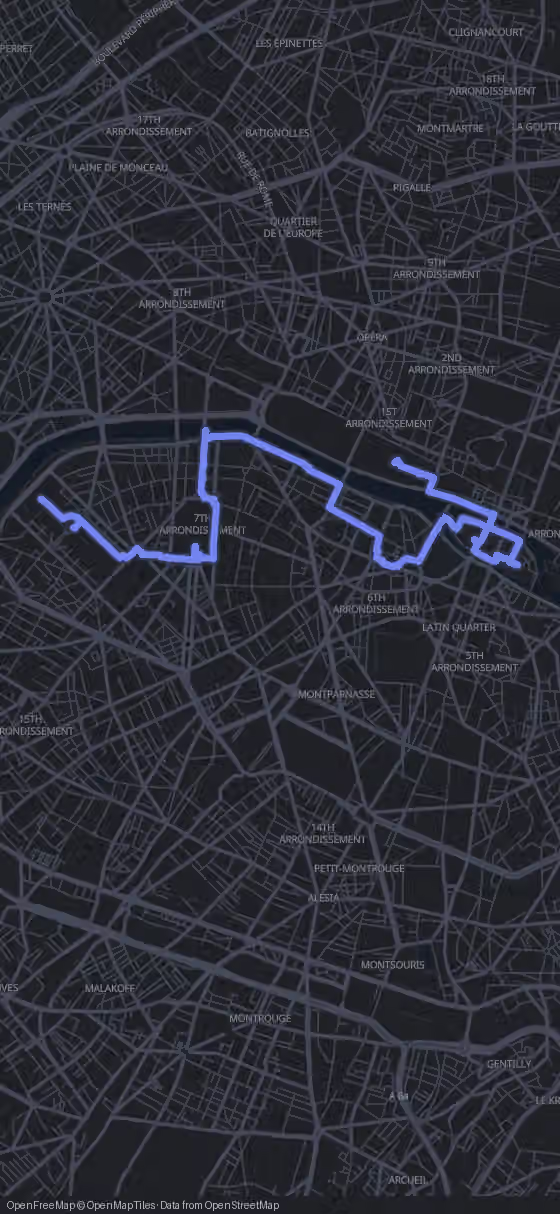
Route map for the Paris walking tour
Stop 1 of 11
520 m·7 min
Eiffel Tower
Head south-east into the Champ de Mars
Bonjour, welcome to Paris. I'm Alex, and this city loves hiding its past in plain sight.
Try this tour with Alex

This Paris Walk at a Glance

Eleven stops lead from the Eiffel Tower to the Louvre Museum, 9.8 km along the Left Bank and across the Île de la Cité. Pure walking time is 2 h 16 min; with short looks at each stop, plan about four and a half hours, and a full day if you go inside.

Champ de Mars, Pont Alexandre III, the Abbey of Saint-Germain-des-Prés, Place Dauphine and Notre-Dame de Paris are free; the other six charge admission. Route, map and GPS navigation are free in your browser, and the AI Tour Guide is optional.

Open free GPS & optional AI Tour Guide
This short shows highlights of the route. All 11 stops follow below.

The Route

Walking Map of Paris from the Iron Lady to the Louvre

11 stops 9.8 km 2 h 16 min walking
Tap to load interactive map

The 11 stops along this route

  1. Eiffel Tower in Paris, stop 1 on the self-guided walking tour
    1Eiffel Tower
  2. Champ de Mars in Paris, stop 2 on the self-guided walking tour
    2Champ de Mars
  3. Les Invalides in Paris, stop 3 on the self-guided walking tour
    3Les Invalides
  4. Pont Alexandre III in Paris, stop 4 on the self-guided walking tour
    4Pont Alexandre III
  5. Musée d'Orsay in Paris, stop 5 on the self-guided walking tour
    5Musée d'Orsay
  6. Abbey of Saint-Germain-des-Prés in Paris, stop 6 on the self-guided walking tour
    6Abbey of Saint-Germain-des-Prés
  7. Place Dauphine in Paris, stop 7 on the self-guided walking tour
    7Place Dauphine
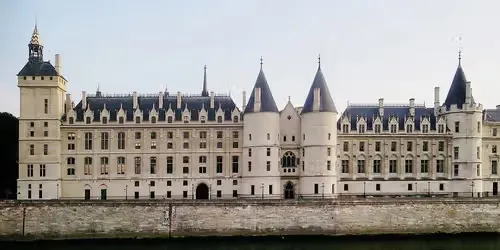
  8. Conciergerie in Paris, stop 8 on the self-guided walking tour
    8Conciergerie
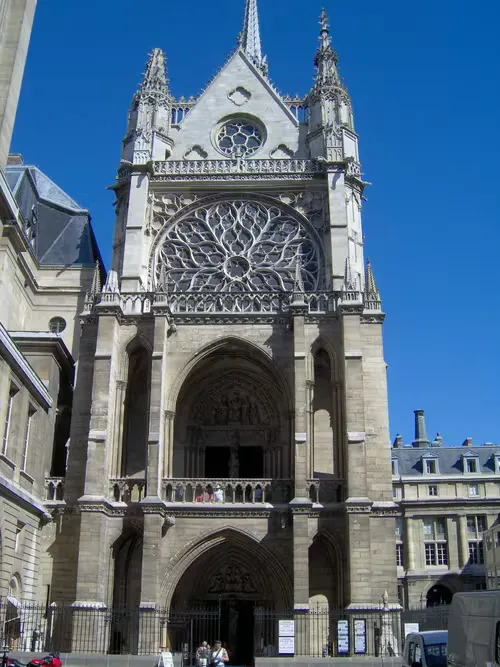
  9. Sainte-Chapelle in Paris, stop 9 on the self-guided walking tour
    9Sainte-Chapelle
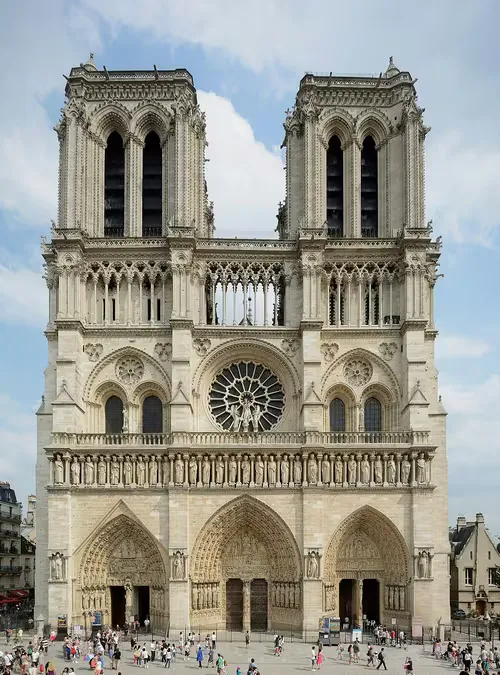
  10. Notre-Dame de Paris, stop 10 on the self-guided walking tour
    10Notre-Dame de Paris
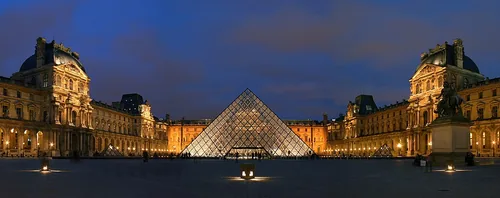
  11. Louvre Museum in Paris, stop 11 on the self-guided walking tour
    11Louvre Museum
  12. That's the full route.

    Walk it with an AI Tour Guide talking you through every one of these streets.

    Start free in your browser
    You made it

Your Paris Walking Tour Stop by Stop, Left Bank to Île de la Cité

  1. 1

    Eiffel Tower

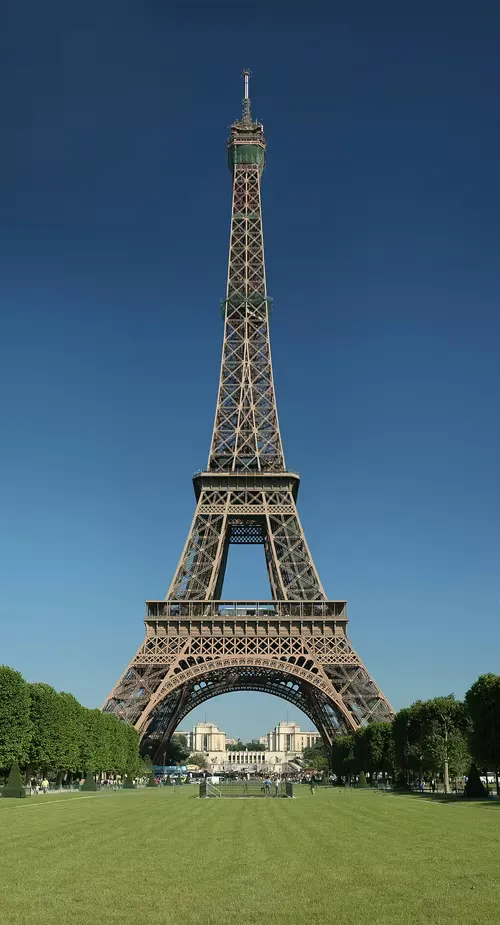
    Eiffel Tower in Paris, stop 1 on the self-guided walking tour

    Start beneath the Iron Lady, as Parisians call her for her wrought iron. Look up through the lattice: 330 metres of iron, about the height of an 81-storey building, standing on a square base 125 metres on each side. Gustave Eiffel's company designed and built it from 1887 to 1889 as the centrepiece of the 1889 World's Fair, timed for the hundredth anniversary of the French Revolution.

    Not everyone cheered. Some of France's leading artists and intellectuals attacked the design while it was going up. It became the tallest human-made structure in the world anyway, the first to pass both 200 and 300 metres, and held that title for 41 years until New York's Chrysler Building was finished in 1930. A broadcasting aerial added in 1957 put it back ahead, today 11 metres taller than its old rival. Since 1964 it has been a monument historique, and since 1991 part of the UNESCO World Heritage Site of the Banks of the Seine.

    Is it worth going up? If you want the view, yes. Tickets take you to the first and second levels or on to the summit, whose upper platform sits 276 metres above the ground, the highest public observation deck in the European Union. The second level already spreads the city out beneath you and costs noticeably less than the summit, so go to the top only if standing up there is the point for you. Both lower levels have restaurants. You won't be alone: it is the most visited paid monument in the world, with close to six million visitors in 2022.

    From the foot of the tower, walk 520 metres, about 7 minutes, onto the long lawns of the Champ de Mars, the old parade ground the tower stands on.
    Local name
    Tour Eiffel
    Hours
    Currently daily 09:00–00:00
    Price
    Adults: 14.80 EUR stairs to second floor, 23.50 EUR elevator to second floor, 28.00 EUR stairs plus elevator to summit, 36.70 EUR elevator to summit. Children under 4: free.
  2. 2

    Champ de Mars

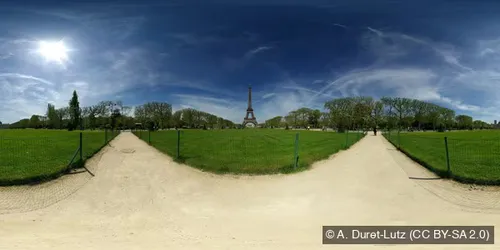
    Champ de Mars in Paris, stop 2 on the self-guided walking tour

    Turn around on the lawns and you have the classic frame: the Eiffel Tower at one end, the École Militaire at the other. The name comes from the Campus Martius in Rome, the field of the war god Mars, and it fits, because the French army once drilled and marched here.

    Before the soldiers came the vegetables. This was part of the flat plain of Grenelle, where Parisians claimed small plots to grow fruit, vegetables and flowers for the market, on soil that was never especially fertile. The change began in 1765 with the École Militaire, designed by Ange-Jacques Gabriel. Drill grounds were first planned south of the school, but the planners chose an esplanade to the north instead, which is why the school's noble façade closes off the park today. They levelled the ground, ringed it with a ditch and an avenue of elms and enclosed it with an ironwork fence. Even a river islet, the Isle of Swans, was joined to the bank for symmetry; it lay where the tower's northeastern foot now stands.

    Two moments to picture as you walk. On 27 August 1783, Jacques Charles and the Robert brothers launched the world's first hydrogen-filled balloon from this ground. A few years later, some of the best-remembered festivals of the French Revolution filled the same space with pageantry. The park is free, a good place to sit for a moment before the longer leg ahead.

    Les Invalides is 1510 metres away, about 22 minutes on foot. Its site belonged to the same Grenelle plain, so you are crossing old farmland all the way.

    Hours
    Open 24 hours daily (public park)
    Price
    Free
    Website
    paris.fr ↗
  3. 3

    Les Invalides

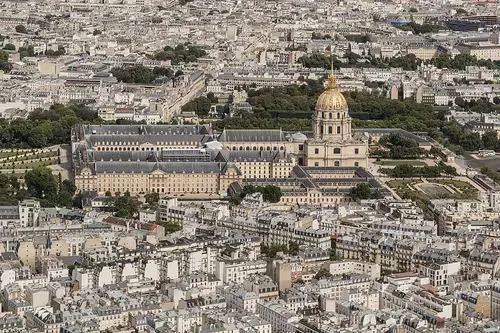
    Les Invalides in Paris, stop 3 on the self-guided walking tour

    The long façade ahead was built as a home for soldiers. On 24 November 1670 Louis XIV ordered a hospital and residence for the aged and disabled veterans of his many campaigns, the invalides who gave the place its name. Libéral Bruant was the first architect, and by 1676 the front facing the Seine stretched 196 metres, with fifteen courtyards behind it. The largest, the cour d'honneur, was laid out for military parades. A hospital and a retirement home for old soldiers are still part of the complex today.

    Rising over it all is the Dôme des Invalides, at 107 metres the tallest church building in Paris. Jules Hardouin-Mansart designed the church and chapel in 1676, drawing on his great-uncle François Mansart's plans for a Bourbon chapel at Saint-Denis, a commission for which Gian Lorenzo Bernini, then living in Paris, had also sent in designs. The royal chapel later became a shrine to France's leading military figures, and its best-known resident is Napoleon, whose tomb lies inside. Next to it, the Cathedral of Saint-Louis-des-Invalides serves as the national cathedral of the French military.

    Should you go in? The complex holds the Musée de l'Armée, the Musée des Plans-Reliefs and the Musée d'Histoire Contemporaine, all about French military history. If that or Napoleon interests you, the paid visit is worth an hour or more. If not, the façade and the dome from outside tell the story well, and you save your time and money for Sainte-Chapelle later on.

    Next comes the bridge that was built so it would not block this view: Pont Alexandre III, 1570 metres or about 22 minutes away.

    Hours
    Daily 10:00–18:00, ticket office closes 30 min before closing. Extended: 1st Friday of the month until 22:00, Sat 6 Jun-11 Jul 2026 until 20:00. Closed: 1 Jan, 1 May, 25 Dec.
    Price
    17 EUR adults (full price)
  4. 4

    Pont Alexandre III

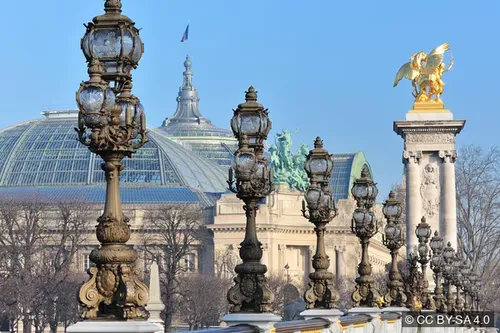
    Pont Alexandre III in Paris, stop 4 on the self-guided walking tour

    Here Paris dressed up for the 1900 Exposition Universelle. Built between 1896 and 1900 in Beaux-Arts style, the bridge is widely regarded as the most ornate in the city, with Art Nouveau lamps, cherubs, nymphs and winged horses at both ends. It is named after Tsar Alexander III, who concluded the Franco-Russian Alliance in 1892, and his son Nicholas II laid the foundation stone in October 1896. It has been a monument historique since 1975.

    Notice how flat it is. The single steel arch rises only 6 metres, because the architects Joseph Cassien-Bernard and Gaston Cousin were not allowed to hide the view of the Champs-Élysées or Les Invalides. The engineers Jean Résal and Amédée Alby made it work. The four massive masonry pillars at the corners, each 17 metres tall, are more than decoration: they act as counterweights that steady the arch without blocking the views.

    On top, gilt-bronze Fames hold back winged Pegasus horses. On the Right Bank stand Emmanuel Frémiet's Fame of the Sciences and Fame of the Arts, with Contemporary France by Gustave Michel and France of Charlemagne by Alfred Lenoir at their bases; on the Left Bank, Pierre Granet's Fame of Commerce and Clément Steiner's Fame of Industry. The lion groups are by Georges Gardet. On the Right Bank the bridge leads to the Grand Palais, whose style it echoes; the nearby Petit Palais, built for the same fair, shows its permanent collection for free if you want an extra museum without another ticket.

    The Musée d'Orsay is 1130 metres away, about 16 minutes. It, too, opened for the 1900 fair, as a railway station.

    Hours
    Freely accessible, no opening hours (bridge)
    Price
    Free
  5. 5

    Musée d'Orsay

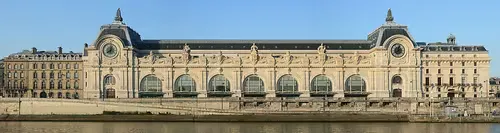
    Musée d'Orsay in Paris, stop 5 on the self-guided walking tour

    This was a railway station first. The Gare d'Orsay, built from 1898 to 1900 for the Paris to Orléans railway, was designed by Lucien Magne, Émile Bénard and Victor Laloux and finished in time for the 1900 Exposition Universelle. Its central spot by the Seine suited commuters, and some critics called the design an anachronism even then.

    Since 1986 it has been a museum of French art from 1848 to 1914: paintings, sculpture, furniture and photography. It holds the largest collection of Impressionist and post-Impressionist masterpieces in the world, with Monet, Manet, Berthe Morisot, Degas, Renoir, Cézanne, Seurat, Sisley, Gauguin and van Gogh. Many of these works hung in the Galerie nationale du Jeu de Paume before the museum opened. In 2022 it drew 3.2 million visitors, second among French art museums only to the Louvre.

    Leave time for the architecture too. Paris became a modern capital under Napoleon III and Haussmann, and the museum gives permanent space to that story, including the Palais Garnier opera house by Charles Garnier, with an area for town planning and decoration at the end of the central aisle.

    Go in if Impressionism is why you came to Paris, and give it a couple of hours rather than a rushed look; Monet's garden in Giverny makes a fine pairing on another day. Entry is free for under-18s, for EU and EEA residents up to age 25, and for everyone on the first Sunday of the month with a booked slot, though that day is busier. Otherwise the riverside building is enough from outside.

    The Abbey of Saint-Germain-des-Prés is 1190 metres away, about 17 minutes, and takes you back more than a thousand years.

    Price
    16 EUR online, 14 EUR at the museum; reduced 11 EUR (at the museum); Thursday late opening from 18:00 12 EUR online / 10 EUR at the museum; free for under 18, EU/EEA residents aged 18–25 and for everyone on the first Sunday of the month (slot booking required)
  6. 6

    Abbey of Saint-Germain-des-Prés

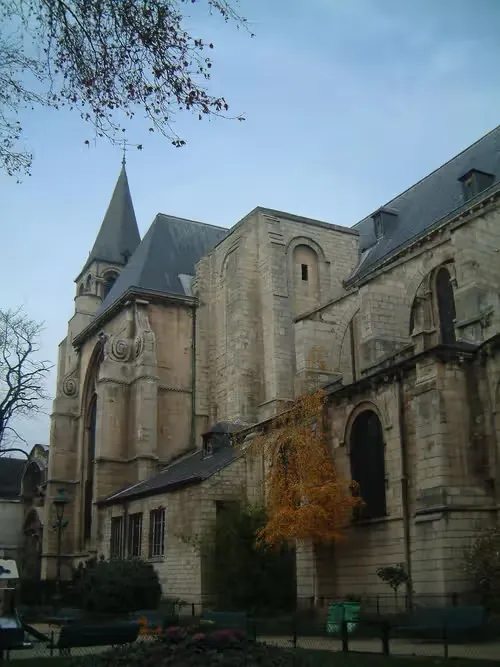
    Abbey of Saint-Germain-des-Prés in Paris, stop 6 on the self-guided walking tour

    You are at what is considered the oldest existing church in Paris. It once stood outside the walls of medieval Paris, among the fields and meadows of the Left Bank known as les Prés, which still give the quarter its name. Even earlier, a Roman temple stood close by, and a Roman road ran past parallel to the Seine, built well above the river to avoid floods.

    Childebert I, son of Clovis, the first King of the Franks, founded a Benedictine abbey here to display two relics he had brought back from the siege of Zaragoza in Spain: a fragment of the True Cross and a piece of the tunic of the martyr Saint Vincent. The abbey was dedicated in 558, the year Childebert died, and he was buried inside. It became the first burial place of the early kings of France, before that role passed to the Basilica of Saint-Denis. The first abbot, Droctovaeus, was a pupil of Bishop Germain, whose name the church took when it was rebuilt after the Vikings destroyed it.

    The building was a pioneer, too. After an 11th-century rebuilding with elements of the new Gothic style, it received the earliest flying buttresses in the Île-de-France in the 12th century. The abbey grew famous for scholarship and illuminated manuscripts, but the Revolution destroyed almost everything except the chapel and the Bishop's palace; the restored chapel became today's parish church. Entry is free, so step inside even if you only have a few minutes.

    Place Dauphine is 870 metres away, about 13 minutes, on the western tip of the Île de la Cité.

    Hours
    Mon: 09:30–20:00 | Tue–Fri: 07:30–20:00 | Sat: 08:30–20:00 | Sun: 09:30–20:00
    Price
    Free
  7. 7

    Place Dauphine

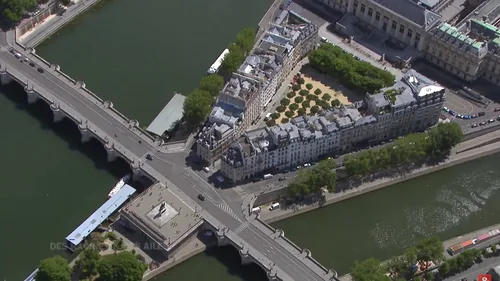
    Place Dauphine in Paris, stop 7 on the self-guided walking tour

    Henry IV began Place Dauphine in 1607, his second public square in Paris after the Place Royale, today's Place des Vosges, which was still under construction at the time. He named it after his son, the Dauphin and future Louis XIII, born in 1601. It is called a square, but look around: it is a triangle.

    Before 1607 this was the King's Orchard, part of the western garden of the walled Palais de la Cité, where the Capetian kings had lived long before the Louvre. Beyond the garden wall lay two riverine islets, little more than mudbanks. One was filled in to extend the island westward, forming the middle section of the Pont Neuf, completed in 1606, and the platform for an equestrian statue of Henri IV, set up in 1614. The other was removed.

    On 10 March 1607 about three acres went to Achille de Harlay, with instructions to build houses that all repeated one prescribed façade, an early piece of planned Paris. A street just 40 metres long, named Rue Henri-Robert since 1948, links the square to the middle of the Pont Neuf, where the Place du Pont-Neuf and the Square du Vert-Galant meet it. The square is free and open to everyone.

    The Conciergerie is only 330 metres away, about 4 minutes, inside the old royal palace whose garden became this square.

    Hours
    Freely accessible, no opening hours (public square)
    Price
    Free
  8. 8

    Conciergerie

    Conciergerie in Paris, stop 8 on the self-guided walking tour

    Here the island's history comes in layers. In Roman times the Île de la Cité belonged to the city of Lutetia, and a governor's fortress stood at its western end. Clovis made it his capital from 508 until his death in 511. At the end of the 10th century Hugh Capet made Paris the capital of the Kingdom of France and built a fortified residence, the Palais de la Cité, on the same spot; Sainte-Chapelle was part of it.

    Philip II gave the building its name. Before leaving on the Third Crusade, he handed his legal authority to the royal court, which met in the Hall of the King to dispense justice, moved the royal archives here and appointed a Concierge, a custodian, to run the palace. He also built the towered façade along the Seine and the great hall with two naves side by side, used for royal ceremonies and court sessions. It once held an immense black marble table from Germany decorated with fleurs-de-lis; a piece of it hangs on the wall of the lower hall.

    The darkest chapter came with the Revolution: 2,781 prisoners, Marie Antoinette among them, were held, tried and sentenced here before being taken elsewhere to the guillotine. Today it is a national monument and museum. Go in if the Revolution or medieval architecture interests you, because two large medieval halls survive from the royal palace; a combined ticket with Sainte-Chapelle makes sense if you want both.

    Sainte-Chapelle, built within the same palace, is 280 metres away, about 4 minutes.

    Hours
    Daily 09:30–18:00 (year-round), last admission 17:30. Closed 1 May and 25 Dec.
    Price
    13 EUR adults
  9. 9

    Sainte-Chapelle

    Sainte-Chapelle in Paris, stop 9 on the self-guided walking tour

    Saint Louis built this palace chapel to house the Crown of Thorns, a piece of the True Cross and other relics of the Passion he acquired from 1239 onward. It was the first of the holy chapels, conceived as a vast reliquary made almost entirely of glass. In the upper chapel, the walls between the windows all but disappear.

    It went up in no more than seven years, yet no construction faults have been found, and nothing was skimped: sculpture, painting and above all the huge original stained-glass windows that tell their stories. Those windows are the treasure today, because the relics were taken away during the Revolution. Look for the so-called relics window, described as the key to the whole picture programme; it tells the story of the relics for which the upper chapel was built.

    The chapel nearly didn't survive. Canons served it until 1787; around 1790 it was closed for worship, emptied and handed to a revolutionary club, and from 1797 it was an archive for the Palais de Justice, whose expansion threatened to swallow it. Public opinion forced a rescue in 1836. Restoration began a year later and took 26 years, and the chapel was listed as a historic monument in 1862, a year before the work ended.

    If you pay for only one interior on this walk, make it this one: the glass is the reason to come, and you can only see it from inside. Notre-Dame de Paris is 570 metres away, about 8 minutes.

    Hours
    1 April-30 Sept: 09:00–19:00; 1 Oct-31 March: 09:00–17:00. Last admission 30 min before closing. Closed 1 Jan, 1 May, 25 Dec.
    Price
    EUR 22 adult; EUR 16 resident; group EUR 130; combined ticket EUR 30 / EUR 23 / EUR 180; free for disabled visitors
  10. 10

    Notre-Dame de Paris

    Notre-Dame de Paris, stop 10 on the self-guided walking tour

    Construction began in 1163 under Bishop Maurice de Sully and was largely complete by 1260. Look for what set it apart from the earlier Romanesque style: pioneering rib vaults and flying buttresses, enormous colourful rose windows and sculpture that is abundant and naturalistic. Inside are three pipe organs, one of them historic, and the bells are immense.

    The cathedral has lived through a lot. In the 1790s revolutionaries damaged or destroyed much of its religious imagery. In the 19th century Napoleon was crowned here, the same Napoleon whose tomb you passed at Les Invalides, and many presidents of the Republic later had their funerals here. Victor Hugo's 1831 novel, known in English as The Hunchback of Notre-Dame, stirred enough interest to bring about a restoration between 1844 and 1864 under Eugène Viollet-le-Duc. Pope Pius VII had made it a minor basilica in 1805.

    On 26 August 1944 the Liberation of Paris was celebrated here with the singing of the Magnificat. In April 2019 a fire caused serious damage and closed the cathedral for long and costly repairs; it reopened in December 2024. Entry is free, so go in and see the restored interior.

    The last leg is the longest of the walk: 1770 metres, about 24 minutes, to the Louvre Museum.

    Hours
    Mon–Wed: 07:50–19:00 | Thu: 07:50–22:00 | Fri: 07:50–19:00 | Sat–Sun: 08:15–19:30
    Price
    Free
  11. 11

    Louvre Museum

    Louvre Museum in Paris, stop 11 on the self-guided walking tour

    You finish at a royal palace with eight hundred years of history on the Right Bank of the Seine. In the 16th century François I made it an emblem of the Renaissance in the heart of Paris. When Louis XIV left for Versailles at the end of the 17th century, part of the royal collections of paintings and ancient sculpture stayed behind, and for a century the palace housed academies, among them painting and sculpture, along with artists the king lodged here.

    The idea of showing the Crown's masterpieces to the public grew during the Enlightenment, and the Revolution made it real, opening the museum in 1793 with additional works confiscated from émigré nobles and churches. War spoils, purchases, patronage, bequests, gifts and archaeological finds kept the collections growing for two more centuries. In 2019 it held more than 500,000 works, over 36,000 on display, in nine departments: Western art from the Middle Ages to 1848, the ancient civilisations of the Orient, Egypt, Greece, Etruria and Rome, early Christian art and the arts of Islam. With 72,735 m² of rooms and galleries, it is the largest art museum in the world.

    The famous names are the Mona Lisa, the Venus de Milo, the Seated Scribe, the Winged Victory of Samothrace and the Code of Hammurabi. After this long walk, the courtyard and façades are a fitting finish; if you want the collection, give it a separate morning with a plan for a few departments. Admission is charged, and the price differs for EEA and non-EEA visitors.

    Hours
    Mon/Thu/Sat/Sun 09:00–18:00, Wed/Fri 09:00–21:00. Closed Tue. Last admission 1 hr before closing.
    Price
    22 EUR adults (EEA citizens), 32 EUR (non-EEA)
Walking tour route map of Paris Route loaded
Eiffel TowerChamp de MarsLes InvalidesPont Alexandre III+7
All 11 stops are already on the map.
You just press start.
AI Tour Guide

You know the way now. Walk it with a guide talking you through Paris.

Press start wherever you are, even hundreds of kilometres from Paris, and the guide begins telling its stories right away. In the city, pick any of the 11 stops to start from: it leads you there, then talks with you the whole route, asking, listening, remembering, and shaping the tour around your answers.

11stops 9.8km 2 h 16 minwalking 13languages
▶Start the tour free

Free to start · Runs in your browser · No app, no download

Shorter Ways to Walk the Route

The route splits neatly in two, so you can spread it over two days or keep only the part that suits your time.

Left Bank landmarks

Stops: 1, 2, 3, 4, 5

For a first afternoon in Paris or if the Eiffel Tower is your focus: from the tower to the Musée d'Orsay, 4.7 km and 1 h 7 min of walking. The Eiffel Tower, Les Invalides and the Musée d'Orsay charge admission; Champ de Mars and Pont Alexandre III are free.

Medieval Paris and the Louvre

Stops: 6, 7, 8, 9, 10, 11

For history and Gothic architecture: from the Abbey of Saint-Germain-des-Prés across the island to the Louvre, 3.8 km and 53 min of walking. The Conciergerie, Sainte-Chapelle and the Louvre charge admission; the abbey church, Place Dauphine and Notre-Dame are free.

Île de la Cité only

Stops: 7, 8, 9, 10

For a short outing or a day already built around a museum: Place Dauphine, Conciergerie, Sainte-Chapelle and Notre-Dame lie close together, 1.2 km and 16 min of walking. Only the Conciergerie and Sainte-Chapelle charge admission.

How Long This Paris Tour Takes, With and Without Museums

The walking itself takes 2 h 16 min. Give each stop about ten minutes of looking and add a coffee, and the outside-only version comes to about four and a half hours. Going inside Sainte-Chapelle and Notre-Dame adds roughly an hour and a half, which brings you to about six hours.

The Eiffel Tower ascent, the Musée d'Orsay and the Louvre each need hours of their own, so pick at most one of them for the same day and save the others. The Left Bank half takes about two hours with outside looks, the medieval half with the Louvre about the same before any interior, and the island alone about an hour, or two and a half with the Conciergerie and Sainte-Chapelle.

Before You Set Off from the Eiffel Tower

  • Start and finish: The recommended order starts at the Eiffel Tower and ends at the Louvre Museum. You can join at any stop; the GPS navigation leads you from wherever you begin to the next one.
  • Getting to the start: Nearby stations are the Métro at La Motte-Picquet-Grenelle and École Militaire and the RER at Champ de Mars-Tour Eiffel.
  • Time of day: Set off in the morning if you want to go inside a place or two; the walk with outside looks alone fits into an afternoon.
  • Tickets: Six stops charge admission: the Eiffel Tower, Les Invalides, the Musée d'Orsay, the Conciergerie, Sainte-Chapelle and the Louvre Museum. Decide beforehand which one or two you will enter, and book reserved slots where free days require them.

Food and Breaks Between the Tower and the Louvre

For a proper sit-down meal at a fair price, a classic bouillon beats a mid-range bistro; during the walk itself, a carafe of tap water keeps your breaks cheap.

Bouillon ChartierA classic Parisian dining room with historic interiors and simple French cooking, where main courses cost far less than at a typical bistro. Don't expect refined cuisine, and be ready to wait for a table.
Une carafe d'eauWhen you stop at a café or restaurant, ask for une carafe d'eau: tap water comes free, while bottled water is charged. Bring your own bottle and refill it along the way.

Tourist Traps to Avoid in Paris When Buying Tickets and Passes

  • Paris Museum Pass for just two museums: If the Louvre and the Musée d'Orsay are the only museums on your list, two single tickets cost much less than the pass. Do the sums with your own list, and remember the Eiffel Tower is not included.
  • Paris Visite pass for an ordinary city day: For a day in the city without an airport transfer, the Navigo Jour covers the same Métro and buses for far less. If you only ride there and back, single tickets are cheaper still; the day pass pays off from five separate train rides.
  • Hop-on hop-off bus as transport: Worth it if you want the open top deck and the commentary, but as a way to get around it costs several times a Navigo Jour.
Walking tour route map of Paris
AI Tour Guide

Your guide is ready when you reach the Eiffel Tower.

Press start and a voice AI Tour Guide takes it from here: leading the route through Paris, telling the stories, and turning your walk into a real back-and-forth conversation. No app or download is needed; it runs in your browser.

11stops 9.8km 2 h 16 minwalking 13languages
▶Start the tour free

Free to start · Runs in your browser · No app, no download

What the AI Tour Guide Adds Between Tower and Louvre

On this route the AI Tour Guide walks with you as a conversation: it greets you at the tower, tells the stories of each place, asks what caught your eye and remembers whether you lean towards Napoleon, Gothic glass or Impressionist painting, then follows that thread. Ask it how the veterans actually lived at Les Invalides, or what Marie Antoinette's weeks in the Conciergerie were like, and interrupt whenever you want; the route stays the same. You start with 100 free credits, then choose this tour all-inclusive for €19.99 with no time limit, or €5 per hour.

A Real Conversation A voice AI Tour Guide greets you, leads the whole route, and tells the stories and facts as you walk, asking what you want to see and keeping a real conversation going. Not a recording you press play on.
Map Navigation Follow the route on the map and walk at your own pace. You choose where to start and when to move to the next stop.
Ask Anything Curious about a building you pass? Ask your AI Tour Guide on the spot and the conversation carries on.
13 Languages Switch language anytime. No separate tour needed.
Start free in your browser

Common Questions About Walking Paris

Can I visit the Conciergerie and Sainte-Chapelle on one ticket?

Yes, there is a combined ticket for both. It makes sense if you plan to go inside both, since they are only 4 minutes apart on foot.

Is Notre-Dame open again after the 2019 fire?

Yes. The cathedral reopened in December 2024 after extensive repairs, and entry is free.

How do I get from the airport into Paris for the walk?

From Charles de Gaulle take the RER B, from Orly the Métro line 14, both on an airport ticket. Travelling alone or as two, the train is much cheaper than a taxi; as a group of three or four, a taxi can work out about the same per person.

Is there a free viewpoint with the Eiffel Tower in the picture?

The rooftop terrace of Galeries Lafayette Paris Haussmann is free and gives you a skyline with the tower in it. It is lower than the tower's levels and can close because of weather or events.

Is the tour really free?

Yes. The whole tour is free: the route, the interactive map and the navigation cost you nothing. Only the voice AI Tour Guide is optional and paid: you test it with 100 free credits, then you pay either €5 per hour or €19.99 for this whole tour, with no time limit. Admission to 6 of the 11 stops is not included: Eiffel Tower, Les Invalides, Musée d'Orsay, Conciergerie, Sainte-Chapelle and Louvre Museum charge their own entry fees.

Do I need to download an app?

No. Everything runs in your phone browser. Open the route and start walking, no download and no sign-up required.

Do I need to book the walking tour in advance?

No booking needed. This self-guided tour is available anytime. Open the route in your browser and start walking. The AI Tour Guide works instantly, no app, no reservation required.

What languages is the AI Tour Guide available in?

The AI Tour Guide speaks 13 languages, so you take the tour in your own language and can switch at any time.

Can I skip stops or change the route?

Yes. Skip any stop, spend extra time at places you like, or start the route from any point. It is your walk, you set the pace.
Image credits
▶ Start free in your browser Runs in your browser, no app, no download