

Porte Mars
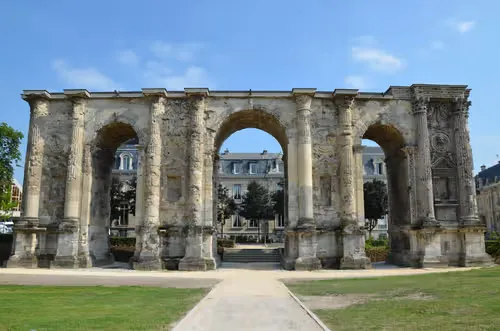
Start at the oldest stone monument in Reims: a Gallo-Roman triumphal arch, probably from the 3rd century, still standing exactly where it was built. It is 13 metres high, 6.4 metres deep and 32 metres wide, which makes it the widest arch of its kind in the world. Walk around it before you walk through it. Three passages cut through the stone, and both the outer faces and the inner walls of the passages were covered with inscriptions and carved decoration.
Now look up into the vaults. The carving is badly eroded, but it holds a rare scene: a Gallic harvesting machine, the kind of everyday detail Roman monuments seldom show. Then look down. Deep ruts under the central arch show where carts rolled through, while people on foot used the passages on either side.
Reims was then Durocortorum, a wealthy city that could afford monuments on this scale. Four gates stood at the ends of its two main axes, the cardo and the decumanus, and this one took its name from a nearby temple to Mars, god of war. From here Roman roads ran to Soissons, Bavay, Laon and Boulogne. One theory says the townspeople raised the arch to honour Emperor Augustus, in thanks for the solid roads the Roman garrison built, and to show off what the alliance with Rome had brought them.
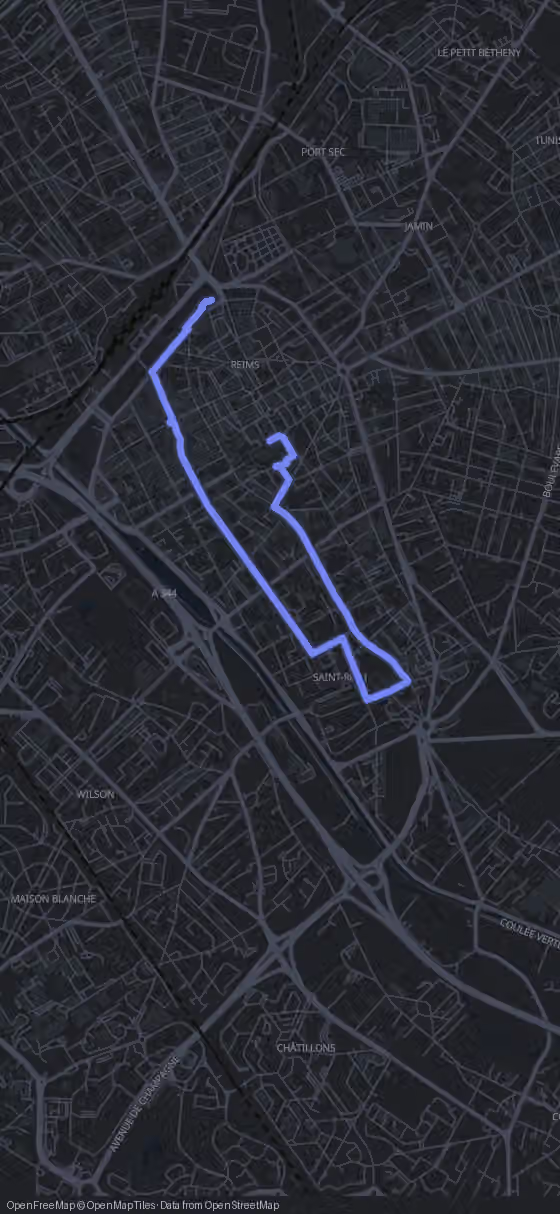
The arch was later built into the bishops' ramparts and served as a city gate until 1544. In 1817 the buildings crowding around it were pulled down so it could be seen properly, and the open space became the Place de la République. From here it's 780 m, about 10 minutes, to Place Drouet d'Erlon.