

Burg Trausnitz
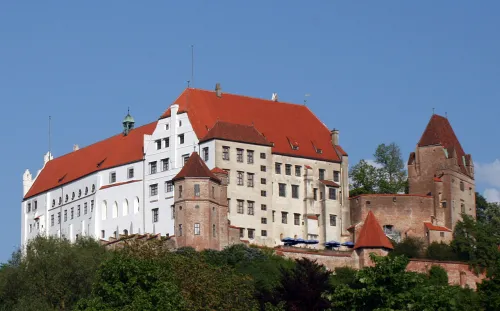
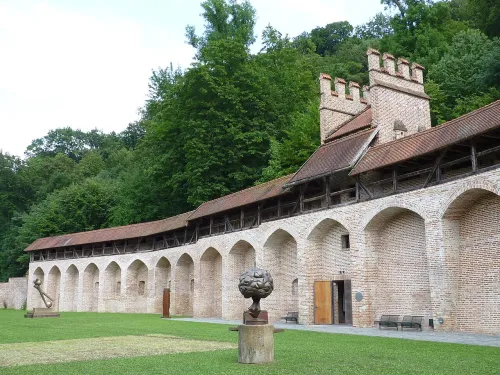
The walk begins where Landshut itself began. Duke Ludwig I founded Burg Trausnitz in 1204, and from 1255 the castle served the Wittelsbach dynasty as their ducal residence for Lower Bavaria, a role it kept until 1503. Later it became a seat of the hereditary rulers of all Bavaria. Everything else on this route came after it.
Inside, the oldest major room is the Knights' Hall, already standing around 1260/70. It covers 245 m², divided into two naves of four bays each and vaulted in the sober style known as Cistercian Gothic. Today it hosts festive banquets and short exhibitions. Directly above it, on the first floor of the Dürnitz wing, lies the White Hall, about 240 m² and two storeys tall. It was probably planned in the 15th century as a grand ballroom, yet it seems never to have been finished: unlike the rest of the castle at the time, it shows no trace of painting.
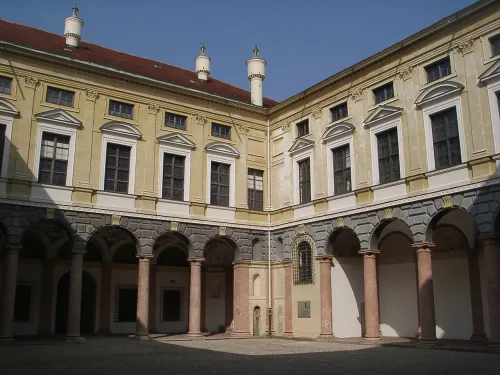
Look out for the Loggia, a name in use since 1493 and completed in the 16th century, and for the wooden ceiling with carved rosettes from the time of Wilhelm V. The Tower Terrace frames the city through round arches and gives you a first look at the town you are about to walk through.
Is the ticket worth it? If you care about how a medieval ducal court lived, yes: it is the only paid entry on the whole walk. Allow about an hour. Short on time or budget? See the courtyard and move on; the rest of the route stays free.
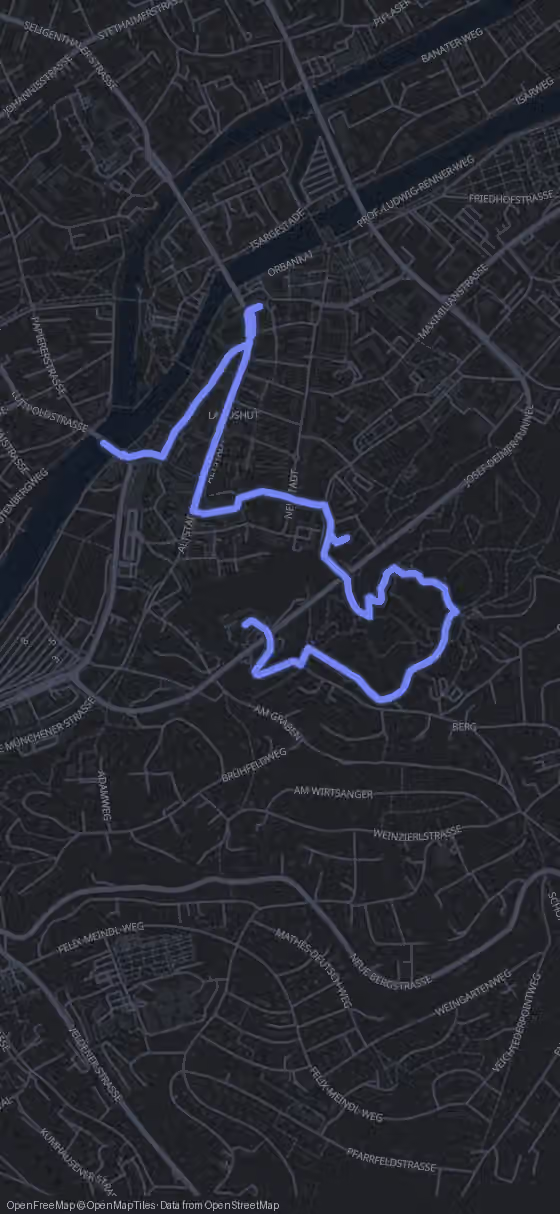
Then comes the longest leg of the day, 970 m and about 14 minutes to the Hofgarten. On the way you pass the Kunst- und Wunderkammer Burg Trausnitz, a cabinet of curiosities of the kind princes filled with rare and marvellous objects in the 16th and 17th centuries.