




Elisabethkirche
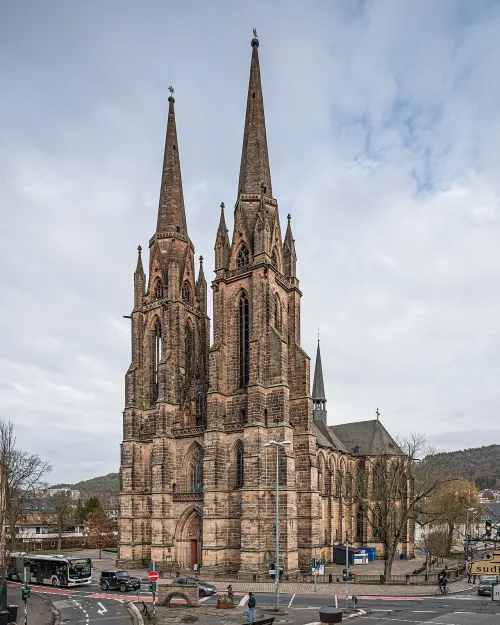
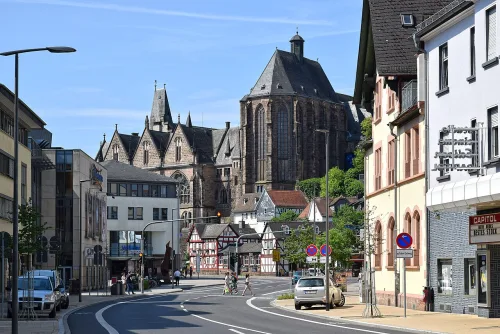
Look up at the twin towers and the tall Gothic windows: this is one of the earliest Gothic churches in Germany, and it was built for one woman. Elizabeth of Hungary founded a hospital for the sick and needy here in 1228, dedicated to Francis of Assisi. She died in it in 1231 and was buried in a simple grave in the hospital's modest Chapel of St. Francis.
Almost at once her grave drew pilgrims, and stories of healing miracles spread. In 1234 Conrad of Thuringia handed the hospital to the Teutonic Knights, who set about building for the crowds. In 1235, the year Elizabeth was declared a saint, Pope Gregory IX allowed the church to grant indulgences, and the cornerstone was laid on 14 August. The builders did not move her grave: the north apse stands right on top of the old hospital chapel. On 1 May 1236, with Emperor Frederick II present, her remains were carried into a new jewelled shrine.
The building went up fast on a single foundation. The crossing and the triple choir were done in the 1240s, a two-storey sacristy by 1261, and the church was consecrated in 1283; the towers took until 1340. The Landgraves of Hesse were buried here, and after Landgrave Philip I turned Protestant in the 16th century, so did the church. It is still a Protestant parish today.
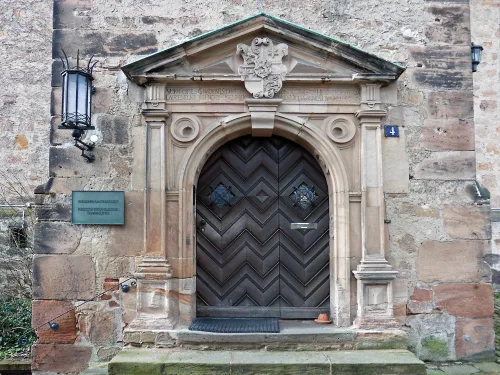
Go in: entry is free, with a donation requested, and this is the interior on the route that rewards time most. Around the church a few buildings of the Teutonic Order survive, among them the Deutschhausgut, now home to the university's mineral collection and geography department.
From here it is the longest leg of the tour, 960 m and about 14 minutes, as you leave the lower town and move into the Marburger Oberstadt, passing the Universitätskapelle on the way to the Alte Universität.