

St.-Patrokli-Dom
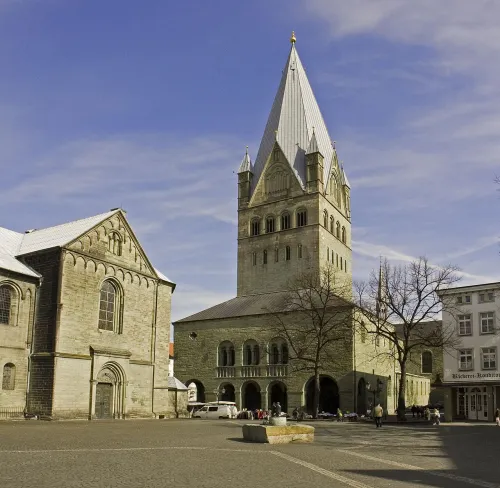
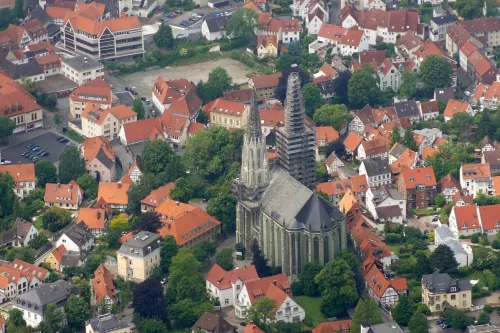
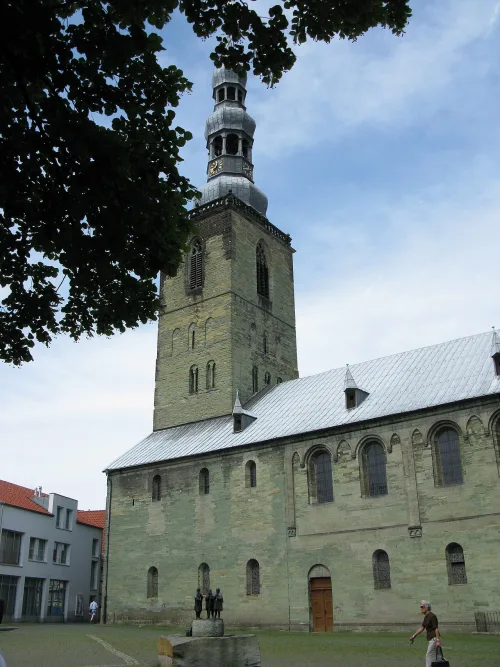
Start in front of the great mass of green sandstone and look up. The tower rises some 80 metres, with four smaller turrets at its corners, and experts often single it out as the most beautiful Romanesque tower in Germany. Locals simply call it the Tower of Westphalia. The whole church is considered the epitome of Romanesque architecture in Westphalia, which is why this parish church has always carried the title “Dom”, cathedral.
The story begins with relics: Soest has held the bones of its patron saint, Patroclus of Troyes, since 954. A community of canons lived here from the 10th century until it was dissolved in 1812. The first church was a basilica dedicated to St. Stephen with two turrets that burned down, and if you look closely you can still spot their traces. The original building with its monumental westwork was finished before the year 1000 and rebuilt after a fire in the first half of the 11th century. In 1075 the knight Walther, brother of Archbishop Anno II of Cologne, was laid to rest in the crypt.
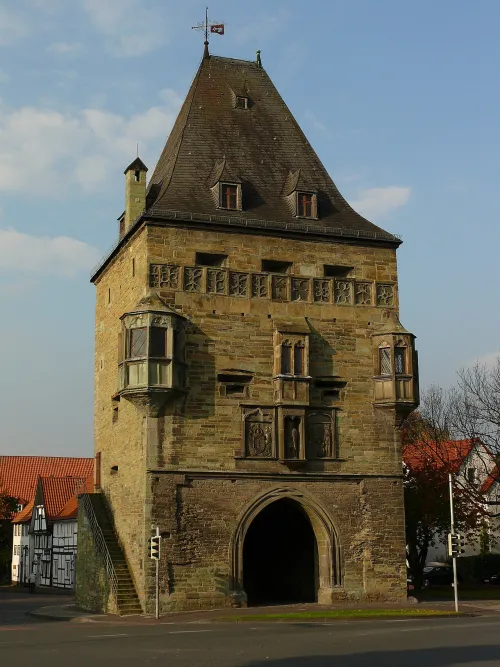
The tower had a surprisingly worldly career. Until the early 19th century it belonged to the town and served as the municipal armoury; today it houses the church museum. Some of the old crossbow bolts stored here have moved to the museum in the Osthofentor, where you will be in twenty minutes. Before you go in, take a look at the spacious forehall with its loggia, which once linked the church to the square.
Going inside is free and worth it for anyone. In the main apse, the painter Peter Hecker created a reworked Christ Pantokrator in 1954, after the much older apse painting, the most extensive of its kind in Westphalia, was destroyed in the Second World War. The Dommuseum in the westwork costs admission and opens only on occasional days.
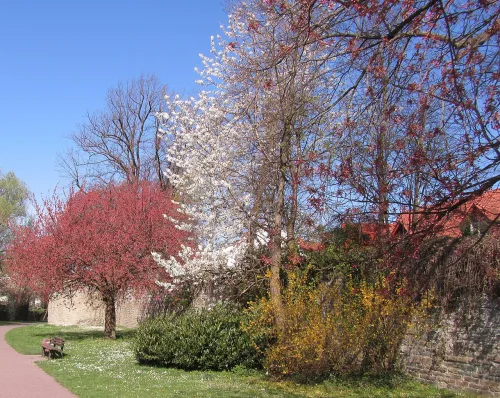
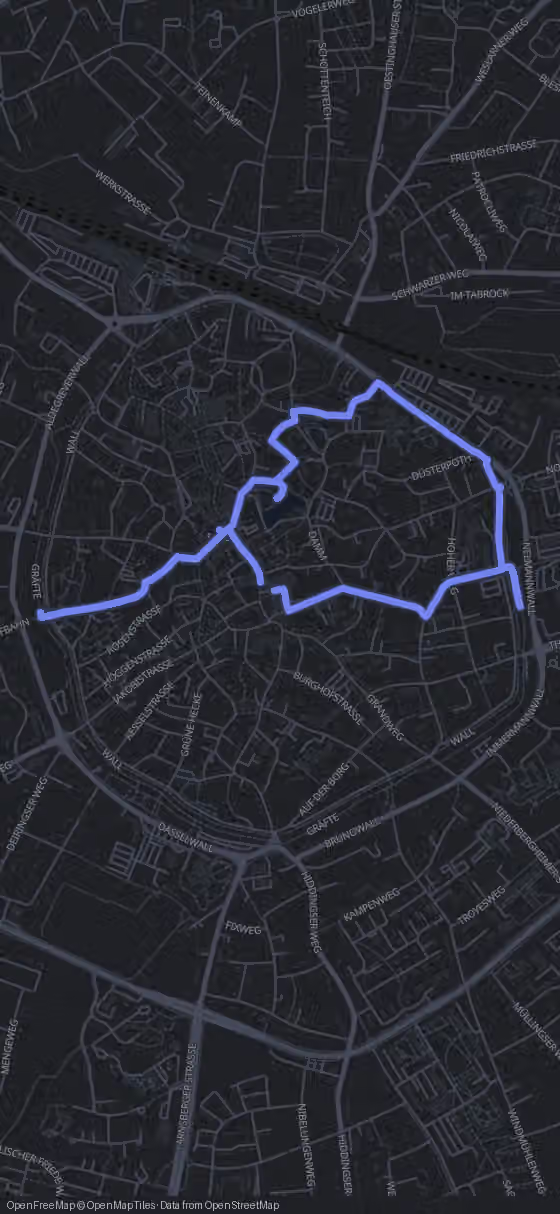
From here it is 770 m, about 11 minutes, out to the Wallanlagen. On the way you pass the Kunstmuseum Wilhelm-Morgner-Haus and the little St.-Nikolai-Kapelle.