Free Walking Tour Ostend: Ensor, a Tall Ship and a Fort

From James Ensor's old shell and mask shop to a 1932 tall ship and Napoleon's brick fort in the dunes, all on one walk through Ostend.

9 Stops 5.6 km ~1 h 16 min walking
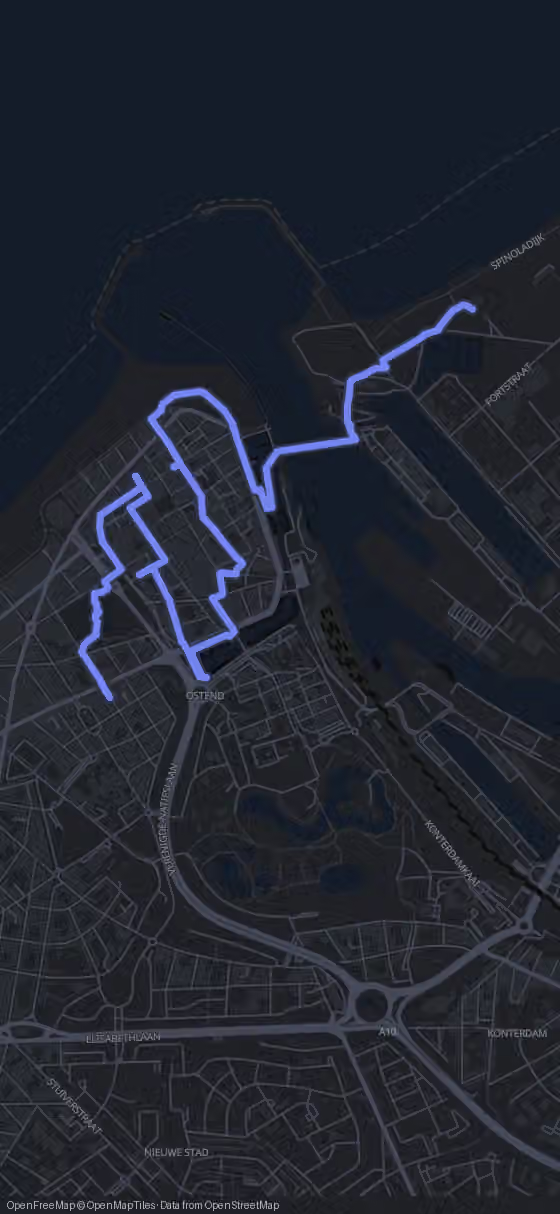
Route map for the Ostend walking tour
Stop 1 of 9
380 m·5 min
Mu.ZEE Art Museum
Head north toward Leopold Park
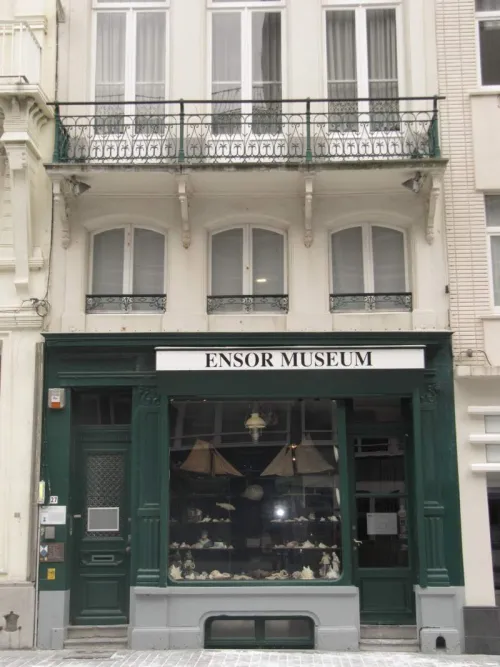
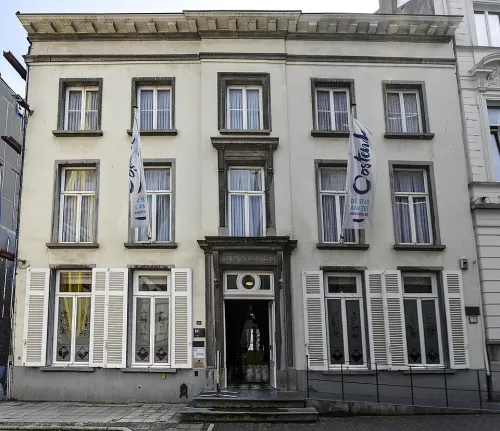
Welcome to Ostend. I'm Alex, and behind one ordinary shopfront began a world of masks, skeletons and strange imagination.
Try this tour with Alex

This Ostend route at a glance

Nine stops lead from the Mu.ZEE Art Museum to Fort Napoleon: 5.6 km with 1 h 16 min of pure walking. Allow about two and a half hours if you stay outside, and about five and a half with the museums.

Leopold Park, the Rock Strangers Sculptures, St. Peter and St. Paul Church and De Grote Post Cultural Centre are free; the James Ensor House, Mercator Ship Museum, Stadsmuseum Oostende and the fort charge admission, and the Mu.ZEE is currently closed. The GPS route is free, the AI Tour Guide optional.

Open free GPS & optional AI Tour Guide
View of Ostend

The Route

Walking Map of Ostend, from the Mu.ZEE to the Dunes

9 stops 5.6 km 1 h 16 min walking
Tap to load interactive map

The 9 stops along this route

  1. Mu.ZEE Art Museum in Ostend, stop 1 on the self-guided walking tour
    1Mu.ZEE Art Museum
  2. Leopold Park in Ostend, stop 2 on the self-guided walking tour
    2Leopold Park
  3. James Ensor House in Ostend, stop 3 on the self-guided walking tour
    3James Ensor House
  4. De Grote Post Cultural Centre in Ostend, stop 4 on the self-guided walking tour
    4De Grote Post Cultural Centre
  5. Mercator Ship Museum in Ostend, stop 5 on the self-guided walking tour
    5Mercator Ship Museum
  6. St. Peter and St. Paul Church in Ostend, stop 6 on the self-guided walking tour
    6St. Peter and St. Paul Church
  7. Stadsmuseum Oostende, stop 7 on the self-guided walking tour
    7Stadsmuseum Oostende
  8. Rock Strangers Sculptures in Ostend, stop 8 on the self-guided walking tour
    8Rock Strangers Sculptures
  9. Fort Napoleon in Ostend, stop 9 on the self-guided walking tour
    9Fort Napoleon
  10. That's the full route.

    Walk it with an AI Tour Guide talking you through every one of these streets.

    Start free in your browser
    You made it

Your Ostend Walking Tour: Art, Ships and a Fortress

  1. 1

    Mu.ZEE Art Museum

    Mu.ZEE Art Museum in Ostend, stop 1 on the self-guided walking tour

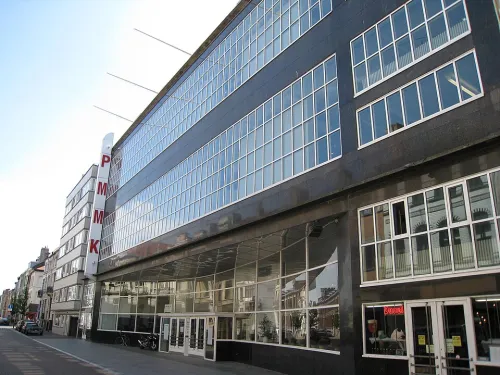
    Your walk starts at the Mu.ZEE, short for Kunstmuseum aan Zee, the Art Museum at the Sea. It is currently closed, so this is a stop for the outside and for the story rather than the galleries. That story begins in 1885, when a private collector gave the city a large gift of art; in 1897 Ostend opened a museum to house it.

    The collection has taken some hard knocks. An air raid in 1940 destroyed the library, the archive and some 400 works of art, and a new building opened in 1958. A second collection, started by the Province of West Flanders in 1957 with regular purchases from young artists, spent years on show in Bruges and Ypres before it found a permanent home in Ostend in 1986. In 2008 the two merged into today's Mu.ZEE, focused on Belgian art from the 19th century to the present.

    Its heart is Ostend's own painters: James Ensor, Constant Permeke and Léon Spilliaert, with 180 works by Spilliaert alone among roughly 3,500 paintings, drawings and etchings. Names like Magritte, Delvaux, Broodthaers, Panamarenko and Luc Tuymans show how far the collection reaches. The museum also looks after Ensor's house, which you reach shortly, and the Permekemuseum in Jabbeke, set up in the painter's own house.

    From here it is 380 m, about 5 min on foot, to Leopold Park.
    Status
    Currently closed
  2. 2

    Leopold Park

    Leopold Park in Ostend, stop 2 on the self-guided walking tour

    Locals call it Den hof, the garden: about five hectares of green laid out between 1861 and 1870 by garden architect Louis Fuchs on the model of an English park, with little bridges, winding paths and flowerbeds. Part of it sits over the old city ramparts, part on former military ground outside them.

    Look for the wooden music kiosk at the centre, built in 1885 and dressed in wrought-iron balustrades, flower motifs and stylised lyres; concerts still take place around it. The winding lake with its ducks and swans hosted big water festivals in the early 20th century, and a sculpture trail sets artworks among the trees. There is also a minigolf with a cafeteria, laid out over what were Ostend's first two tennis courts.

    One rule from 1862 sums up the seaside town's priorities: tourists walked in free, while Ostenders had to pay. Two springs found here in 1859 got their own little drinking pavilions; they lasted until 1940 and 1960, and many older locals still regret that the second one was torn down.

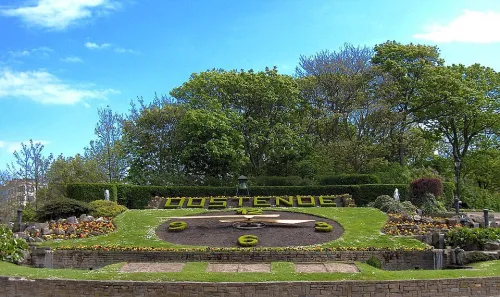
    On the edge of the park stands the flower clock, placed in 1933 and moved to its present spot in 1963, after the extension of Leopold II-Laan in 1956 had cut it off. It measures 9 m across, its hands are covered in gold leaf, and its bronze bell from 1748 comes from the old St Peter's tower. Tens of thousands of flowers and plants go into it every year.

    The park is free and always open; give it twenty minutes, then walk 710 m, about 10 min, to the James Ensor House.

    Hours
    Open 24/7
    Price
    Free
  3. 3

    James Ensor House

    James Ensor House in Ostend, stop 3 on the self-guided walking tour

    This narrow three-storey house near the promenade was the last home and studio of James Ensor, the 'painter of masks' and a forerunner of Expressionism. He inherited it in 1917 from his uncle Leopold Haegheman and his aunt, who had run a souvenir shop on the ground floor selling postcards, shells, toys and masks, the masks especially popular at carnival time.

    Ensor closed the shop soon after, but left its fittings exactly as they were. He moved in with his servant Auguste Van Yper and lived and worked here until his death in November 1949, keeping open house for friends, admirers, critics, journalists and prominent guests.

    The house had a bumpy afterlife. Friends opened it as a museum in 1952, but much of the furniture had already been auctioned. The city took it over in 1956, upkeep proved too expensive, the museum closed, and for a while there was talk of demolition. In 1973 Ensor's friends tried again; after a full renovation, in which curator Frank Edebau played a large part, Queen Fabiola reopened the house in September 1974.

    You are welcomed in the former souvenir shop, where a photo shows how it once looked and you can buy postcards of scenes from Ensor's life. Entry is paid, and it is worth it if you care about Ensor or want to see how an artist really lived; if his famous canvases are your goal, you will not find them on these walls.

    From here it is 520 m, about 7 min, to De Grote Post Cultural Centre.

    Local name
    Ensorhuis
    Hours
    Tue–Sun 10:00–18:00, Mon closed (except during Flemish school holidays and public holidays); closed 01/01 and 25/12; closes at 17:00 on 24/12 and 31/12
    Price
    14 EUR general admission; 6 EUR youth (6-14); 9 EUR students (15-25); children under 6 free; free with museumPASSmusées
  4. 4

    De Grote Post Cultural Centre

    De Grote Post Cultural Centre in Ostend, stop 4 on the self-guided walking tour

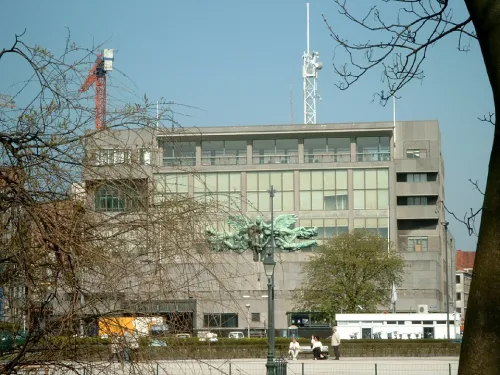
    Until 1999 this was Ostend's post office. Its predecessor was destroyed by bombing in the Second World War, and between 1947 and 1953 architect and designer Gaston Eysselinck built the replacement on the same spot, furniture included. Postwar Ostend thought little of it at first; the Flemish authorities listed it as a monument in 1981, and in 2009 it joined the heritage list.

    Look at the front for the monumental copper sculpture by Flemish artist Jozef Cantré, titled De Communicatiemedia, or 'Unity of the world through telephony, telegraphy and post'. It shows a naked goddess surrounded by four female figures meant to stand for the different peoples of the world. The work set off a fierce dispute between the client and Eysselinck, and in 1953 the architect was barred from his own building site, partly because of it.

    Belgian Post moved its logistics to a new sorting centre in 1995 and closed the counters in 1999, after which the building stood almost empty. The city bought it in 2003, Antwerp firm B-architecten took on the conversion once the plans were approved in 2009, and in December 2012 it reopened as De Grote Post. You can walk in freely, and the CultuurCafé makes an easy coffee stop.

    Then it is 590 m, about 8 min, to the Mercator Ship Museum.

    Hours
    Ticket desk Wed–Sat 13:00–17:00 (closed during summer break in August); offices Tue–Fri 09:30–17:00 (closed 12:00–13:00); CultuurCafé daily 08:30 onwards; performances open 1 hour before start
    Price
    Event-dependent (ticketed performances vary; free entrance to building, exhibitions, and CultuurCafé)
  5. 5

    Mercator Ship Museum

    Mercator Ship Museum in Ostend, stop 5 on the self-guided walking tour

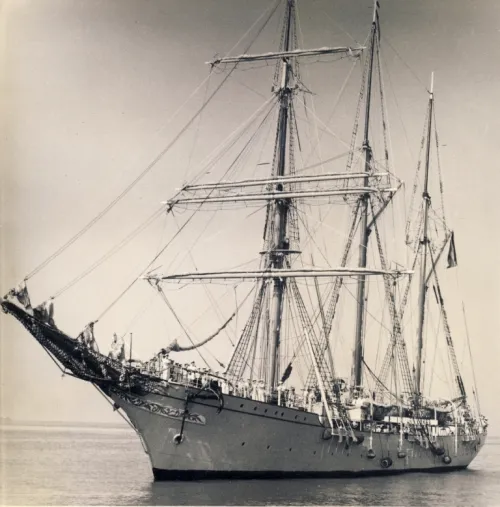
    Moored in the marina in front of the city hall since 1964, the Mercator is a steel-hulled barquentine launched in 1932 as a training ship for the Belgian merchant fleet. She was designed by G.L. Watson & Co., built in Leith in Scotland and named after the cartographer Gerardus Mercator. Look at the rigging: square sails on the foremast, fore-and-aft sails on the main and mizzen masts. Under her usual 15 sails, about 1,600 m² of canvas, she could easily make 13 knots with a fair wind.

    Her voyages are the real draw. On her seventh cruise in 1934 she sailed from Pitcairn Island via Tahiti to the Marquesas and Honolulu for a Belgo-French scientific expedition, and brought two Easter Island statues back to Europe; Chile gave one to France and one to Belgium. In 1936 she carried home the remains of Father Damien, the Flemish missionary to the lepers, from Molokai in Hawaii.

    In February 1940 she left on her last cruise before the war, to Rio de Janeiro and on to Boma in Congo. From early 1945 to mid 1947 the British Admiralty used her as a submarine depot ship. After a thorough overhaul she sailed again as a training ship from January 1951, completing 41 voyages across almost every sea, plus several scientific missions. In 1961 she became a floating museum, first in Antwerp and then here.

    Going aboard costs admission and is worth it for anyone curious about life at sea. From the ship it is 570 m, about 8 min, to St. Peter and St. Paul Church.

    Hours
    Summer season (Apr–Oct): Tue–Sun 10:00–17:00, Mon closed; Winter season (Nov–Mar): Sat–Sun 10:00–17:00; School holidays and public holidays: Tue–Sun 10:00–17:00; Closed Mondays, 25 Dec, and 1 Jan (last admission 16:00–16:15)
    Price
    8 EUR adults; 6 EUR children (6-14); 7 EUR students (up to 25) and teachers; children under 6 free
  6. 6

    St. Peter and St. Paul Church

    St. Peter and St. Paul Church in Ostend, stop 6 on the self-guided walking tour

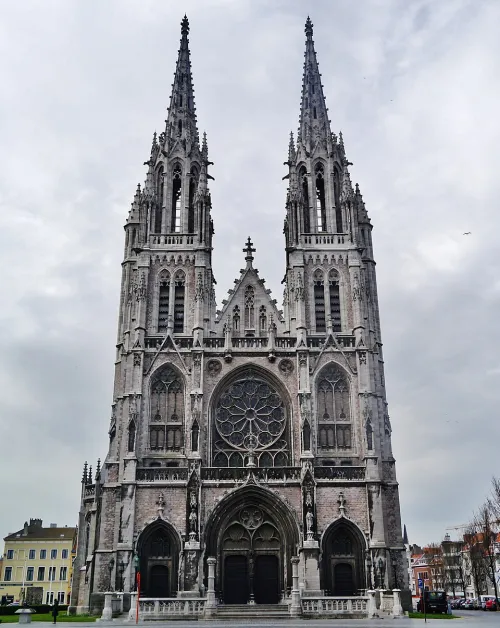
    St. Peter and St. Paul is Ostend's neo-Gothic deanery church: 70 m long, 36 m wide, with towers 72 m high, on a Latin cross plan with the nave slightly higher than the aisles. Bruges city architect Louis de la Censerie drew every stone and every ornament in detail, taking his cue from Cologne Cathedral and Vienna's Votivkirche. He first turned the job down for lack of time and only accepted under pressure from King Leopold II.

    It stands here because of a fire. On 14 August 1896 the old St Peter's church burned down. Leopold II, who had big plans for Ostend, had wanted that church gone, but the dean of the day stood in his way. Parts of the Bruges bourgeoisie spread the rumour that the king knew more about the fire than he let on; after months of investigation the prosecutors never found a culprit.

    Look behind the church for the only survivor of the old one, the tower known as the pepper pot. While the new church went up, a temporary church stood beside it. Work began on 18 April 1899 and the shell was finished by October 1904; the large square in front was created by expropriating and demolishing several blocks of houses.

    The walls are Meuse limestone, a stone already used for Roman villas and well suited to fine carving, combined with brick, Belgian bluestone and pink granite. Get close to the façade to see what that stone allows. Entry is free, though the interior only opens at set times. From here it is 540 m, about 7 min, to the Stadsmuseum Oostende.

    Local name
    Sint-Petrus-en-Pauluskerk
    Hours
    Church interior (published Sep 2026): Mon 14:00–16:30; Tue–Sat 09:30–12:00 & 14:00–16:30; Sun 10:00–12:00
    Price
    Free
  7. 7

    Stadsmuseum Oostende

    Stadsmuseum Oostende, stop 7 on the self-guided walking tour

    The Stadsmuseum Oostende, once called the Oostends Historisch Museum De Plate, is the town's museum of local history. It is also home to the royal local history society De Plate, which researches Ostend's past, looks after the collection and publishes a monthly magazine about the town and its people.

    Its roots go back to October 1893, when the city council decided to set up a fine arts museum. The idea came from alderman Auguste Liebaert, city secretary Alphonse Van Iseghem and painter-restorer Henri Permeke, who also started the first local history museum, a separate room for historical objects and images. From 1899 it filled the ground floor of an 18th-century house called La Plume in Kerkstraat, until it had to make way for the Albert school in 1906.

    Its next home, in the Maria-Hendrika park, was little more than a glorified shed. It opened at Easter 1907 as the Musée Ancien, named after Liebaert, and the displays were a jumble without any order: firefighting gear, old banners, religious objects, leftovers from the sculpture studio the shed had once been, promotional material from world's fair pavilions, and archaeological finds dug up while building St. Peter and St. Paul Church, the stop you just left. Old cannons and architectural fragments from the Hotel de la Plage, donated by hotelier Auguste De Clerck, rested in the garden. It stayed there until 1914.

    Admission is paid; give it half an hour if you want the town's everyday history after its art and ships. Then it is a short 340 m, about 5 min, to the Rock Strangers Sculptures.

    Hours
    Mon and Wed–Sun 10:00–12:00 and 13:30–18:00, Tue closed; open on public holidays; closed 25 Dec and 1 Jan
    Price
    6 EUR standard; 3.50 EUR students, seniors 65+, disabled (EDC card), and residents; free for under 18; 3 EUR per person for groups of 10+
  8. 8

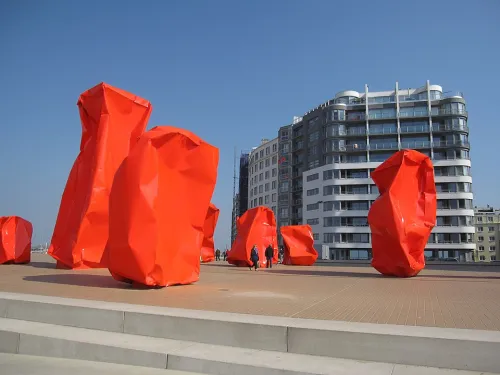
    Rock Strangers Sculptures

    Rock Strangers Sculptures in Ostend, stop 8 on the self-guided walking tour

    At Zeeheldenplein the route reaches the promenade and its strangest residents: the Rock Strangers by Arne Quinze, a permanent open-air installation. It costs nothing and never closes, so you can walk all the way around it at any hour. After the kiosk ironwork in the park and the 1932 ship, this is Ostend in a contemporary key.

    This square is also your last decision point. Beyond it lies the longest leg of the walk, 2,010 m or about 25 min, out of the centre to the dunes east of the harbour. Commit to the fort now, or make Zeeheldenplein your finish and keep Fort Napoleon for another day.

    Hours
    Open 24/7
    Price
    Free (outdoor public sculpture)
  9. 9

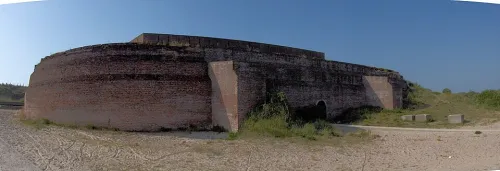
    Fort Napoleon

    Fort Napoleon in Ostend, stop 9 on the self-guided walking tour

    Napoleon visited Ostend several times from 1798 on and wanted to use its strategic position in his wars. After British attacks, the coast here had been fortified from 1803, and in 1811 work began in the dunes east of the harbour on a base for an invasion of Britain. More than 400 Spanish prisoners of war built it in brick between 1811 and 1814.

    What you see is classic fortress design on a pentagonal plan: a two-storey central building with sides of 28 m around an inner courtyard, a dry moat, and covered passages with loopholes leading out to an outer ring wall 8 m high. The upper floor stored weapons and ammunition. Life inside was basic: a simple kitchen and bakery, a cistern for rainwater and a single toilet, in one of the passages. The Fort Impérial was meant for 260 soldiers and officers and 46 cannons.

    It never saw action for the emperor, because it was finished just as his empire collapsed. British troops occupied it in 1815, and the Dutch took over the same year and renamed it Fort Willem I after their first king. German occupying forces used it in both world wars. After years of decay it passed in 1995 to the Flemish heritage foundation Stichting Erfgoed, was thoroughly restored and opened as a museum in 2000.

    Going in costs admission and suits anyone with a taste for military history; even from outside, the brick walls and the moat repay the walk. The fort also has indoor and outdoor dining, a good place to sit down at the end of the route.

    Hours
    Summer season (01/04 – 11/11): Tue–Sun 10:00–18:00 (last admission 16:45); Winter season (12/11 – 31/03): Tue–Sun 10:00–17:00 (last admission 15:45); Closed Mondays (except public holidays and Flemish school holidays); Closed 25 Dec and 1 Jan
    Price
    14 EUR adults; 9 EUR children (6-14); 9 EUR groups (10+); children under 6 free
Walking tour route map of Ostend Route loaded
Mu.ZEE Art MuseumLeopold ParkJames Ensor HouseDe Grote Post Cultural Centre+5
All 9 stops are already on the map.
You just press start.
AI Tour Guide

Read it, now walk it: Ostend with a guide in your ear

Press start wherever you are, even hundreds of kilometres from Ostend, and the guide begins telling its stories right away. In the city, pick any of the 9 stops to start from: it leads you there, then talks with you the whole route, asking, listening, remembering, and shaping the tour around your answers.

9stops 5.6km 1 h 16 minwalking 13languages
▶Start the tour free

Free to start · Runs in your browser · No app, no download

Shorter ways to walk Ostend

Not every day has room for nine stops and a fortress. These cuts keep the same order and trim the walking.

Art quarter

Stops: 1, 2, 3, 4

For art lovers with a morning to spare: the Mu.ZEE from outside, the park, Ensor's house and the old post office. 1,610 m and 22 min of walking; only the James Ensor House charges admission.

Centre without the fort

Stops: 1, 2, 3, 4, 5, 6, 7, 8

For anyone who wants to finish on the promenade at Zeeheldenplein instead of in the dunes. 3,650 m and 50 min of walking; admission at the James Ensor House, the Mercator Ship Museum and the Stadsmuseum Oostende.

Harbour and history

Stops: 5, 6, 7, 8, 9

For history and seafaring fans: the tall ship, the church, the town museum, the sculptures and the fort. 3,460 m and 45 min of walking; admission on the Mercator, at the Stadsmuseum Oostende and at Fort Napoleon.

How Long Does the Ostend Walk Take, With and Without Museums?

Pure walking time is 1 h 16 min over 5.6 km, and up to the Rock Strangers Sculptures no leg takes longer than 10 min. The one long stretch is the last: 2,010 m, about 25 min, out to Fort Napoleon.

With the worthwhile visits inside, plan about five and a half hours: around 45 min at the James Ensor House, 40 min aboard the Mercator, a quarter of an hour in the church, half an hour at the Stadsmuseum and an hour at the fort. If you stay outside, two and a half hours is enough.

The art quarter takes about 1 h 50 min including the Ensor House, the centre without the fort about four hours with its three museums, and the harbour and history walk about 3 h 20 min.

Before you set off in Ostend

  • Start: The Mu.ZEE Art Museum is the recommended start, but you can join the route at any stop.
  • Finish: Fort Napoleon, in the dunes east of the harbour. To end in the centre, stop at the Rock Strangers Sculptures on Zeeheldenplein.
  • Time of day: Start in the morning if you want to go into the museums; with all of them the walk fills most of a day.
  • Admission: The James Ensor House, the Mercator Ship Museum, the Stadsmuseum Oostende and Fort Napoleon charge entry; the other stops are free, and the Mu.ZEE is currently closed. Check current opening times before you set out.
  • Route and guide: Route, map and GPS navigation in the browser are free. The AI Tour Guide starts with 100 free credits; after that you choose this tour all-inclusive for €19.99 with no time limit, or credits at €5 per hour.
Walking tour route map of Ostend
AI Tour Guide

Ready when you are: a guide for Ensor's town

Press start and a voice AI Tour Guide takes it from here: leading the route through Ostend, telling the stories, and turning your walk into a real back-and-forth conversation. No app or download is needed; it runs in your browser.

9stops 5.6km 1 h 16 minwalking 13languages
▶Start the tour free

Free to start · Runs in your browser · No app, no download

What the AI Tour Guide adds between Ensor and the fort

This route stacks very different stories: a painter's mask shop, a post office fought over because of a sculpture, a ship that carried Easter Island statues, a fort built by prisoners of war. The AI Tour Guide takes you through them as a conversation: it greets you, tells the stories, asks what you want more of and remembers it, so if the Mercator's voyages grip you more than neo-Gothic stonework, the talk shifts that way. Ask it what Ensor's masks mean in his paintings or what a day aboard a training ship was like, and it picks up the thread.

A Real Conversation A voice AI Tour Guide greets you, leads the whole route, and tells the stories and facts as you walk, asking what you want to see and keeping a real conversation going. Not a recording you press play on.
Map Navigation Follow the route on the map and walk at your own pace. You choose where to start and when to move to the next stop.
Ask Anything Curious about a building you pass? Ask your AI Tour Guide on the spot and the conversation carries on.
13 Languages Switch language anytime. No separate tour needed.
Start free in your browser

Common Questions About Walking Ostend

Can I see James Ensor's paintings on this walk?

Only in part. The James Ensor House shows where he lived and worked, but the paintings that hung there in his lifetime are now in major museums and private collections. The Mu.ZEE, which holds a large Ensor collection, is currently closed.

Can I go into De Grote Post without a ticket?

Yes. The building, its exhibitions and the CultuurCafé are free to enter; only performances are ticketed.

Where can I eat at the end of the route?

Fort Napoleon has indoor and outdoor dining, so you can sit down right where the walk ends.

Is there a similar walk nearby for a second day?

Yes. Bruges is 21 km away and has its own free route, and Ghent works well as a day out too.

Is the tour really free?

Yes. The whole tour is free: the route, the interactive map and the navigation cost you nothing. Only the voice AI Tour Guide is optional and paid: you test it with 100 free credits, then you pay either €5 per hour or €19.99 for this whole tour, with no time limit. Admission to 4 of the 9 stops is not included: James Ensor House, Mercator Ship Museum, Stadsmuseum Oostende and Fort Napoleon charge their own entry fees.

Do I need to download an app?

No. Everything runs in your phone browser. Open the route and start walking, no download and no sign-up required.

Do I need to book the walking tour in advance?

No booking needed. This self-guided tour is available anytime. Open the route in your browser and start walking. The AI Tour Guide works instantly, no app, no reservation required.

What languages is the AI Tour Guide available in?

The AI Tour Guide speaks 13 languages, so you take the tour in your own language and can switch at any time.

Can I skip stops or change the route?

Yes. Skip any stop, spend extra time at places you like, or start the route from any point. It is your walk, you set the pace.
Image credits
▶ Start free in your browser Runs in your browser, no app, no download